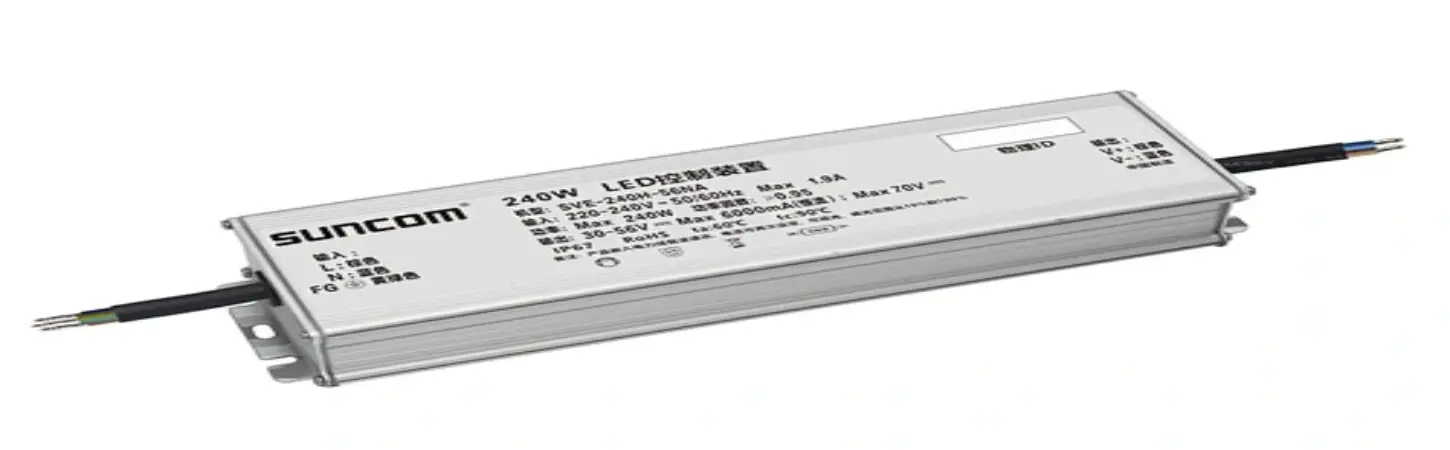
What's the Difference Between an LED Driver and a Power Supply?
2024-01-09
Have you ever pondered the distinctions between an LED driver and a power supply?
Despite sharing similar names and serving the common purpose of supplying power to electronic devices, these two components exhibit significant differences. Although LED drivers and conventional AC/DC power supplies are separate entities, they are occasionally used interchangeably, often referred to as LED power supplies – though this terminology isn't universally applicable.
In this article, we will delve into the disparities between LED drivers and traditional power supplies. Additionally, we'll provide valuable tips for making informed purchases, assisting you in selecting the optimal solution for your specific requirements.
Despite sharing similar names and serving the common purpose of supplying power to electronic devices, these two components exhibit significant differences. Although LED drivers and conventional AC/DC power supplies are separate entities, they are occasionally used interchangeably, often referred to as LED power supplies – though this terminology isn't universally applicable.
In this article, we will delve into the disparities between LED drivers and traditional power supplies. Additionally, we'll provide valuable tips for making informed purchases, assisting you in selecting the optimal solution for your specific requirements.
A LED Driver is a Power Supply - Designed Specifically for LEDs
Before delving into the distinctions between an LED driver and a power supply, it's crucial to recognize that an LED driver is, indeed, a specific type of power supply.
Precisely, an LED driver is crafted to deliver the requisite current for lighting applications, particularly tailored for LEDs. Unlike conventional AC/DC power supplies, which cater to a variety of appliances, LED drivers are purpose-built for optimizing the performance of LEDs.
This differentiation equips LED drivers with several advantages over AC/DC power supplies, including enhanced efficiency, more precise voltage control, and safeguards against excessive current or voltage that could potentially harm your lights.
Given the potential repercussions of improper use—leading to suboptimal performance or even failure—grasping the difference between an LED driver and a power supply is imperative for both consumers and commercial users seeking high-quality lighting solutions.
In this regard, LED drivers outshine traditional AC/DC power supplies by offering heightened voltage accuracy and more efficient operation, contributing significantly to the reliability and longevity of lighting systems.
Furthermore, LED drivers often feature additional functionalities such as dimming capabilities, a luxury not commonly found in standard AC/DC power sources.
Moreover, the compact size of LED drivers allows them to fit into tight spaces where larger AC/DC power supplies might be impractical, adding a layer of versatility to their utility in certain scenarios.
Precisely, an LED driver is crafted to deliver the requisite current for lighting applications, particularly tailored for LEDs. Unlike conventional AC/DC power supplies, which cater to a variety of appliances, LED drivers are purpose-built for optimizing the performance of LEDs.
This differentiation equips LED drivers with several advantages over AC/DC power supplies, including enhanced efficiency, more precise voltage control, and safeguards against excessive current or voltage that could potentially harm your lights.
Given the potential repercussions of improper use—leading to suboptimal performance or even failure—grasping the difference between an LED driver and a power supply is imperative for both consumers and commercial users seeking high-quality lighting solutions.
In this regard, LED drivers outshine traditional AC/DC power supplies by offering heightened voltage accuracy and more efficient operation, contributing significantly to the reliability and longevity of lighting systems.
Furthermore, LED drivers often feature additional functionalities such as dimming capabilities, a luxury not commonly found in standard AC/DC power sources.
Moreover, the compact size of LED drivers allows them to fit into tight spaces where larger AC/DC power supplies might be impractical, adding a layer of versatility to their utility in certain scenarios.
LED Driver Vs Power Supply
In addition to being specifically designed for LEDs, the distinctions between an LED driver and a power supply catering to other devices are quite pronounced. For example, AC/DC power supplies are commonly employed to deliver household electricity, supporting a diverse array of appliances such as computers, TVs, and microwaves.
In contrast to LED drivers, these power supplies typically offer a broad spectrum of voltage options, possess the capability to handle both AC and DC output, and deliver significantly higher wattages than those required for lighting applications. It raises the question: What exactly differentiates AC from DC power, and is household electricity AC or DC?
AC power, denoting alternating current, involves a periodic change in voltage direction, while DC power, or direct current, maintains a constant flow. AC/DC power supplies usually incorporate a rectifier to convert AC voltage into DC, making it compatible with electronic devices.
Household electricity is predominantly AC power, featuring output voltages of 110-120 VAC or 220-240 VAC, depending on the region. This voltage can be converted to 50 VDC or 60 VDC through a rectifier and then regulated down to the specific DC voltage required for the device in use. The choice between high-voltage and low-voltage power supplies depends on the application, and modular power supplies, allowing for future expansion, are available albeit at a higher cost compared to fixed models.
Considering potential issues, symptoms of a malfunctioning power supply can range from excessive heat emission to unexplained shutdowns, emphasizing the importance of having backup systems in place.
When evaluating the cost-effectiveness and longevity of LED drivers versus traditional AC/DC power supplies, it's crucial to consider not only the initial cost but also the total energy savings over time. LED drivers, with their lower wattage consumption and improved power supply efficiency rates, can contribute to substantial long-term savings.
Ultimately, regardless of the device requiring power, a comprehensive understanding of the disparities between LED drivers and traditional AC/DC devices ensures a well-informed and optimal purchase decision.
Would an LED Driver Work as a Power Supply for a Different Device?
In general, LED drivers are purpose-built to provide the necessary current and voltage for the proper functioning of LEDs.
However, there are instances where an LED driver might be utilized as a power supply for other devices like computers, TVs, and microwaves. Nevertheless, it is crucial to consider certain factors before doing so.
Unlike traditional AC/DC power supplies, LED drivers deliver specific currents or voltages tailored for lighting applications. This specificity implies that the wattage provided may not be sufficient for other devices, potentially leading to undesired operation or damage.
Hence, it is advisable to thoroughly research the requirements of the target device before using an LED driver as a power supply. This entails assessing its wattage rating, efficiency rating, and power supply sizing requirements.
Moreover, understanding the distinction between UL listed and UL recognized power supplies is essential, along with determining whether the device requires AC or DC output.
Additionally, when experimenting with any power source, it's crucial to be vigilant for signs of malfunctions, such as excessive heat emission or unexplained shutdowns. This proactive approach allows for a prompt replacement of the power source before more serious issues arise.
While an LED driver may occasionally serve as a substitute power source for other devices, AC/DC sources typically remain the preferred option due to their higher wattage capabilities and a wider range of power supply voltage options better suited for most applications.
Selecting the right power source for your device can be a nuanced process. It is imperative to comprehend the various factors influencing this decision when choosing the optimal LED driver or power supply to meet your specific needs.
How to Choose the Right LED Driver or Power Supply?
Tips for Finding the Right LED Driver or Power Supply for Your Unique Needs:
1.Consider Your Application
Identify the specific application of the device you are powering. Determine whether an LED driver or a power supply is more suitable, taking into account factors such as wattage rating, efficiency, and size requirements.
2.Utilize Resources
Conduct thorough research online to gain insights into selecting a product that aligns with your specific needs. Seek advice from experienced professionals who possess knowledge about these products and their applications to ensure an informed decision.
3.Class 2 vs Class II Power Supply
Understand the difference between Class 2 and Class II Power Supply Units (PSUs). Class II PSUs offer enhanced safety features, protecting users from electric shock hazards and minimizing fire risks due to short circuits or overloads in electronic devices.
4.Look for UL Listings & Recognition
Check for UL listings or recognition when choosing a power source. Underwriters Laboratories (UL) is an independent product safety company that tests and evaluates products for safety compliance before they enter the market. This certification adds confidence to your purchase decision.
5.Open Frame vs Enclosed Power Supply
Decide whether you need an open frame or enclosed design based on your application requirements. Open frame designs offer flexibility and increased airflow, but wiring can be challenging. Enclosed designs, featuring a metal case, provide easy installation but may require attention to prevent overheating issues.
6.Find Out About Warranty & Support
Before making a purchase, inquire about the warranty and support services provided by the manufacturer or supplier. Look for companies offering installation guides, after-sale technical support, and other customer service-related services. This applies to both LED drivers and LED power supplies, ensuring you have the necessary assistance after your purchase.
Identify the specific application of the device you are powering. Determine whether an LED driver or a power supply is more suitable, taking into account factors such as wattage rating, efficiency, and size requirements.
2.Utilize Resources
Conduct thorough research online to gain insights into selecting a product that aligns with your specific needs. Seek advice from experienced professionals who possess knowledge about these products and their applications to ensure an informed decision.
3.Class 2 vs Class II Power Supply
Understand the difference between Class 2 and Class II Power Supply Units (PSUs). Class II PSUs offer enhanced safety features, protecting users from electric shock hazards and minimizing fire risks due to short circuits or overloads in electronic devices.
4.Look for UL Listings & Recognition
Check for UL listings or recognition when choosing a power source. Underwriters Laboratories (UL) is an independent product safety company that tests and evaluates products for safety compliance before they enter the market. This certification adds confidence to your purchase decision.
5.Open Frame vs Enclosed Power Supply
Decide whether you need an open frame or enclosed design based on your application requirements. Open frame designs offer flexibility and increased airflow, but wiring can be challenging. Enclosed designs, featuring a metal case, provide easy installation but may require attention to prevent overheating issues.
6.Find Out About Warranty & Support
Before making a purchase, inquire about the warranty and support services provided by the manufacturer or supplier. Look for companies offering installation guides, after-sale technical support, and other customer service-related services. This applies to both LED drivers and LED power supplies, ensuring you have the necessary assistance after your purchase.
Related Products


How to Replace LED Drivers in 5 Important Steps
Everything You Want to Know About 0-10V Dimming
Related Article
This article explains the core principles of both dimming logics, their hardware implementations, and key practical considerations for field deployment.
Understanding Positive and Negative Logic Dimming in LED Driver
Understanding LED Constant Current LED driver for Outdoor Lighting
LED Constant Current Drivers: The Core Heart of Outdoor Luminaires