What Is an LED Driver and How Does It Work?
2023-09-20
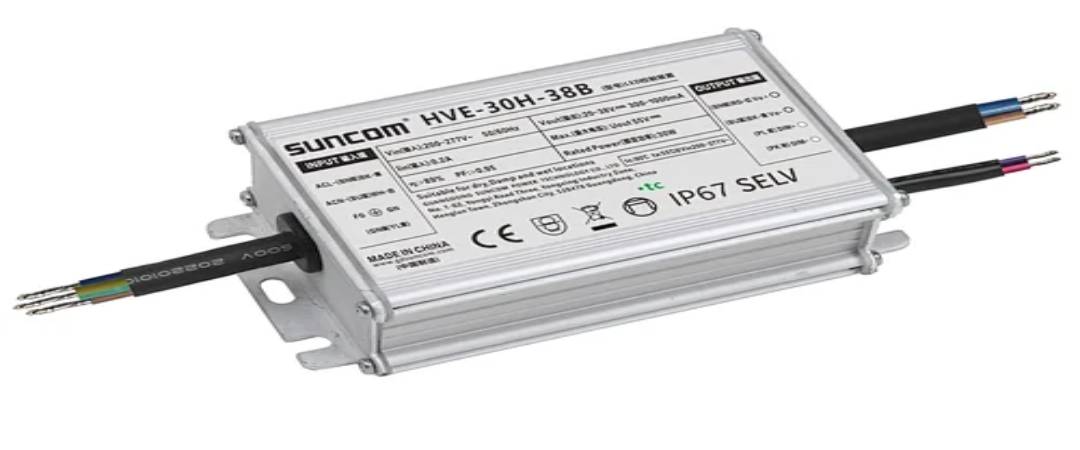
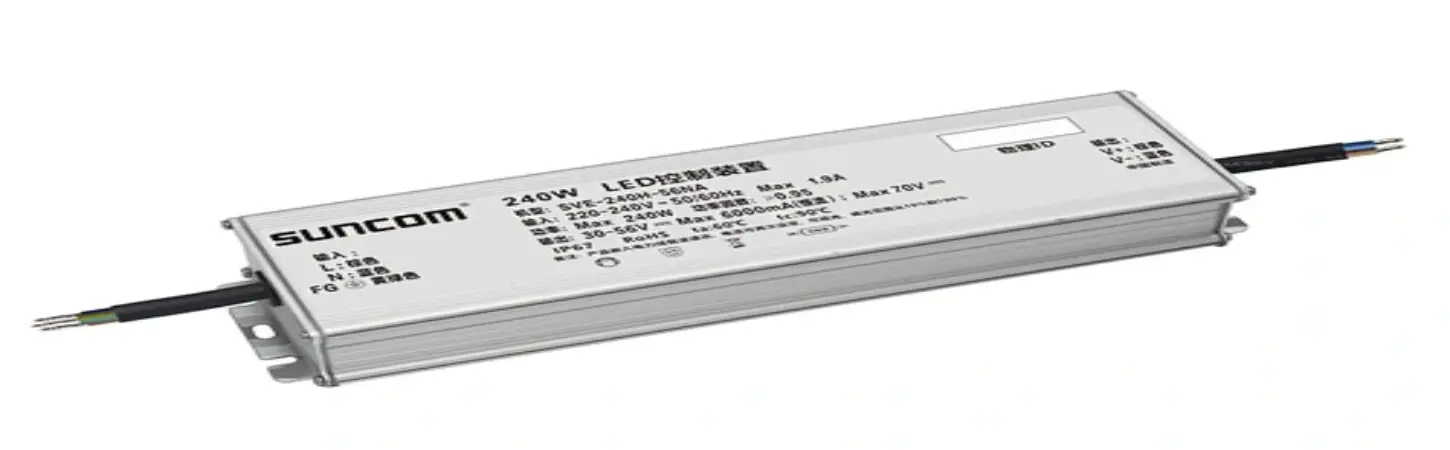
LED lighting is very different from other conventional lighting methods. There are a number of reasons why LEDs need LED drivers. One of the reasons is that they require an LED driver to control their electrical current. A few are even hidden within what you might consider to be the "bulb", for example an A19 or T8 LED. They are often similar to fluorescent ballasts, but are available in all shapes and sizes.
In spite of the many great benefits LED lighting offers, such as energy efficiency, long-term durability, and environmental friendliness, one of its potential disadvantages is that LEDs require a constant and consistent flow of electricity at every moment, at the exact voltage that they require at that moment. In this way, the LEDs will be kept at a constant temperature. If an LED becomes too hot, it may begin to malfunction and perform poorly, resulting in poor performance.
LED drivers are essential to keeping LEDs running at their best.
Click here to shop the selection of LED drivers on gdsuncom.com
An LED driver provides power to one or more LEDs exactly as its name implies.
Ins & Outs of LED Drivers
In spite of the many great benefits LED lighting offers, such as energy efficiency, long-term durability, and environmental friendliness, one of its potential disadvantages is that LEDs require a constant and consistent flow of electricity at every moment, at the exact voltage that they require at that moment. In this way, the LEDs will be kept at a constant temperature. If an LED becomes too hot, it may begin to malfunction and perform poorly, resulting in poor performance.
LED drivers are essential to keeping LEDs running at their best.
Click here to shop the selection of LED drivers on gdsuncom.com
What is an LED Driver?
An LED driver provides power to one or more LEDs exactly as its name implies.
LEDs are very energy efficient -- as we mentioned previously, they actually operate off DC power at a fairly low voltage -- usually between 2V and 4V -- because they do not require a huge amount of power to turn them on. We mentioned previously that LEDs were very energy efficient. Therefore, they need something that can convert AC power into DC power for them, as well as something that is able to keep them safe from any power surges that might occur, which may cause the LEDs to overheat and become problematic as a result.
In addition to acting as an electrical current manager, LED drivers also play a role in providing a buffer to protect the LEDs from damage. LED drivers are just like Baby Bear in the Goldilocks story -- everything fits just right.
There are two distinct types of LED driver products on the market today -- constant voltage and constant current. Read the product specifications of your LED lamp to ensure that you are using the right type. They cannot be used interchangeably. Each version is designed for different things in different situations.
In addition to acting as an electrical current manager, LED drivers also play a role in providing a buffer to protect the LEDs from damage. LED drivers are just like Baby Bear in the Goldilocks story -- everything fits just right.
There are two distinct types of LED driver products on the market today -- constant voltage and constant current. Read the product specifications of your LED lamp to ensure that you are using the right type. They cannot be used interchangeably. Each version is designed for different things in different situations.
Constant Voltage LED Driver
A constant voltage driver is used for LED products that require a steady and constant DC voltage to keep them performing properly. A constant voltage can be used in conjunction with LED lamps or other products that already come with a built-in driver for the current that is being used. It does not require anything other than something to maintain the voltage. Also, it is primarily intended for applications in which the LEDs are arranged in a strip configuration and are connected together in parallel to the driver. The driver ensures that every LED receives the same voltage.
LEDs are often used in landscape and accent lighting, as backlighting for advertising signs, and in huge high-definition LED displays. They can usually be dimmed to meet individual requirements.
Constant Current LED Driver
Rather than regulating the voltage, a constant current LED driver manages the actual current that comes in to the LED's diode in order to get things jumping in the p-n junction in the first place. Furthermore, this type of driver helps regulate the amount of forward current that can occur between the LEDs in order to prevent overheating. Photons are generated as a result of the LED being turned on. The LEDs can malfunction if there is too much forward current flowing, causing them to overheat.
As far as constant current drivers are concerned, they are mainly used to maintain a constant current through a string or a series of LEDs when a lighting fixture does not have a current driver already built in. Constant current drivers come in a variety of different configurations.
LED Configurations
In order to understand how LED drivers work, it is important to know the different types of LED configurations. The two most common LED configurations are series and parallel LEDs.
LEDs are often connected in series in order to make a continuous current flow through all the LEDs from one anode to another cathode.
You must keep in mind that in order for the entire string of LEDs to maintain their output, you must make sure that you are providing enough voltage to keep them all working at the same time. So, for example, if each LED needs 2V to illuminate, and you have 10 LEDs, you will need 20V to keep them all going.
There is also another configuration for LEDs that is known as a parallel configuration. Here we connect multiple strings of LEDs in parallel to the driver. For instance, if you had 50 LEDs, it would make a lot more sense to have five strings of 10 LEDs each running in parallel, rather than all 50 in one string. A parallel configuration is intended for situations where you want to limit the voltage necessary to operate the strings of LEDs in a parallel fashion.
Parallel strings of LEDs can also be configured in a matrix by connecting them in a series.
Dimming & Color Sequencing
Some LED drivers also support dimming and/or color syncing, depending on their specifications.
It depends on the type of LED driver you select whether they have a dimming skill that covers all ranges of operation. The driver dims the LEDs by either shortening the amount of leading current going through them, or through pulse width modulation (PWM). Almost all drivers that support dimming use PWM, which means no flickering and very little color change in the LEDs when dimmed.
LEDs are not affected by dimming, and it will not negatively affect how long they last either. In fact, dimming may actually help LEDs last longer, since it reduces the amount of heat they generate when lit.
When a LED string is sequenced or changed, many times it may have LEDs of different colors. In fact, many times a "white" colored LED lamp isn't actually using "white" colored LEDs at all. Instead, a white light is produced by combining different colors that work together. Using a driver with this capability, you would be able to control all the LED colors in the product, creating a rainbow of colors depending on which ones are turned on and which ones are turned off.
How Does an LED Driver Work
How Do I Choose the Right LED Driver?
Related Article
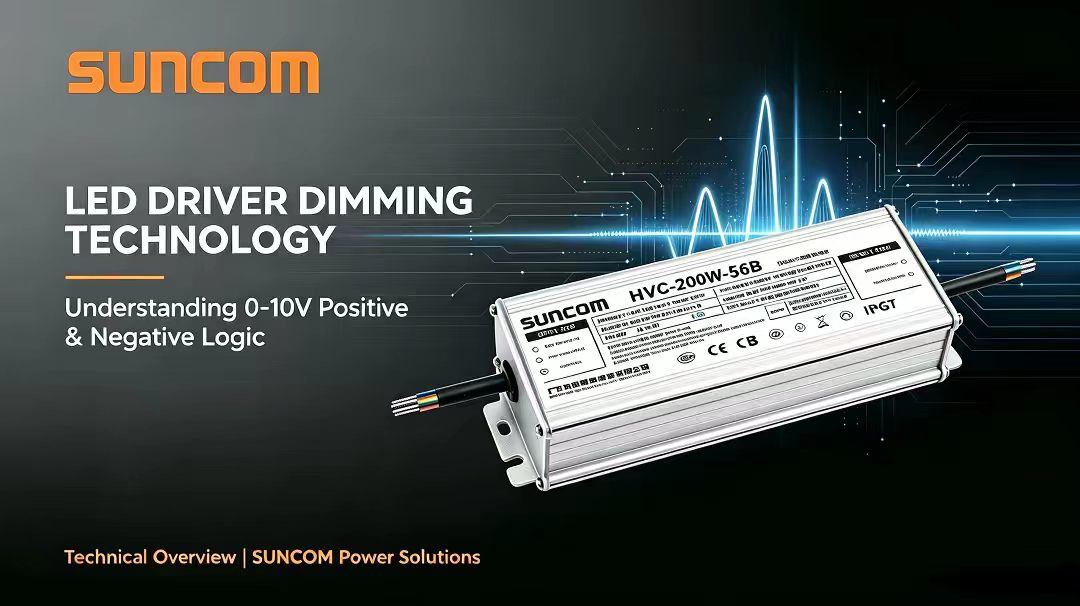
This article explains the core principles of both dimming logics, their hardware implementations, and key practical considerations for field deployment.
Understanding Positive and Negative Logic Dimming in LED Driver

Understanding LED Constant Current LED driver for Outdoor Lighting
LED Constant Current Drivers: The Core Heart of Outdoor Luminaires