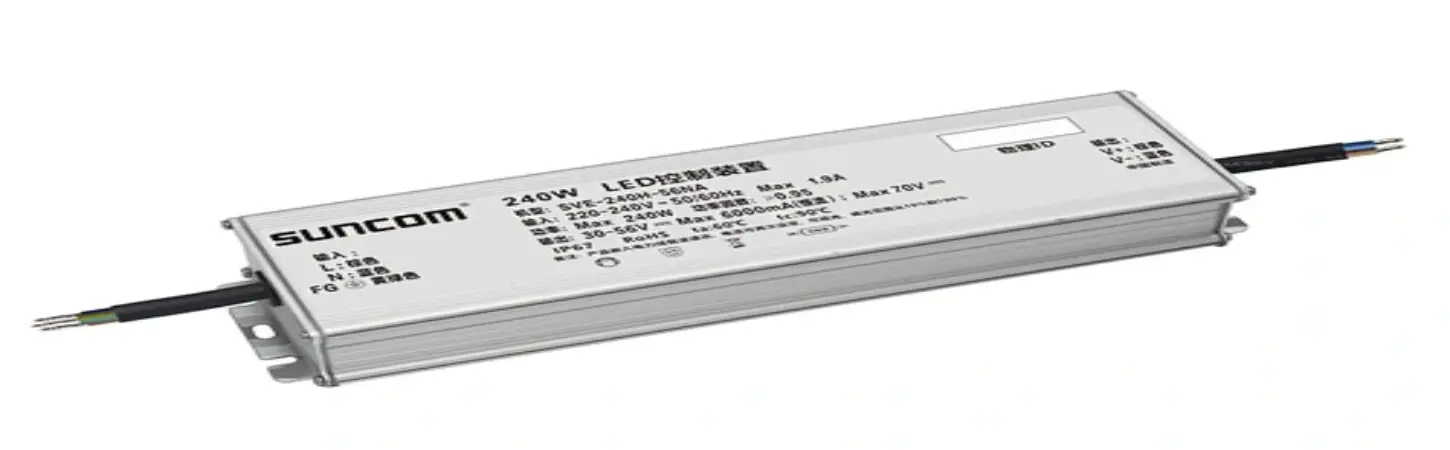
Types of LED Drivers: Constant Current vs. Constant Voltage
2023-08-30

In the world of LED lighting, choosing the right LED driver is crucial to ensure optimal performance and longevity of your lighting system. Among the essential considerations when selecting an LED driver are whether it should be a constant current or constant voltage driver. In this article, we'll delve into the differences between these two types of LED drivers, highlighting their benefits and when to use each.
Constant Current LED Drivers
Constant current LED drivers deliver a consistent, regulated current to the LED circuit. These drivers are designed to maintain a steady current flow, regardless of fluctuations in LED voltage. This makes constant current drivers ideal for applications where multiple LEDs are connected in series.
When to Use Constant Current LED Drivers:
LED Arrays: Constant current drivers are suitable for LED arrays or configurations where LEDs are connected in series, ensuring that each LED receives the same current for uniform brightness.
Precise Control: Applications requiring precise control of LED current, such as in display panels and signage, benefit from the stability of constant current drivers.
Thermal Management: Constant current drivers can help manage heat dissipation as they regulate current, preventing LEDs from overheating due to excessive current flow.
Precise Control: Applications requiring precise control of LED current, such as in display panels and signage, benefit from the stability of constant current drivers.
Thermal Management: Constant current drivers can help manage heat dissipation as they regulate current, preventing LEDs from overheating due to excessive current flow.

Applications for Constant Current LED Drivers
Constant current LED drivers play a vital role in various lighting scenarios, ensuring precise control and uniform brightness. Here are some applications where constant current LED drivers are particularly well-suited:
1. LED Arrays and Strips:
Constant current drivers are ideal for powering LED arrays and strips where multiple LEDs are connected in series. They ensure consistent current across all LEDs, resulting in uniform illumination.
2. Architectural Lighting:
Architectural lighting installations often require even and consistent brightness to highlight building features. Constant current drivers provide the desired uniformity for impactful lighting displays.
3. Display Signage:
LED signs, billboards, and displays demand accurate illumination for readability. Constant current drivers offer the precision required for maintaining uniform brightness across the signage.
4. Street Lighting:
Streetlights require reliable and consistent illumination for public safety. Constant current drivers ensure that all LED modules in the light fixture operate uniformly, enhancing visibility.
5. Automotive Lighting:
In automotive applications, such as headlights and taillights, uniform and stable illumination is crucial. Constant current LED drivers contribute to consistent brightness and longer LED lifespan.
6. Retail Lighting:
Retail environments aim for well-lit and appealing displays. Constant current drivers enable consistent lighting across shelves and products, enhancing visual appeal.
7. Backlit Panels and Panels:
LED-backlit panels and displays need uniform lighting to avoid hotspots or uneven brightness. Constant current drivers ensure a smooth and even distribution of light.
8. Medical and Scientific Instruments:
Precision instruments, like microscopes and medical devices, require stable and accurate lighting. Constant current LED drivers offer the necessary control for optimal performance.
9. Industrial Workstations:
In industrial settings, workstations need consistent lighting for efficient operations. Constant current drivers ensure a steady and reliable light source.
10. Museum and Gallery Lighting:
Museums and galleries rely on accurate lighting to showcase artworks. Constant current LED drivers deliver consistent illumination, enhancing the viewing experience.
Constant Voltage LED Drivers
On the other hand, constant voltage LED drivers provide a consistent voltage output to the LEDs. These drivers are designed for LED setups where the LEDs are connected in parallel. They allow you to connect multiple LEDs to the driver as long as their total forward voltage matches the driver's output voltage.
When to Use Constant Voltage LED Drivers:
Parallel Configurations: Constant voltage drivers are ideal for LED setups where LEDs are connected in parallel, allowing flexibility in the number of LEDs connected as long as the voltage requirements match.
Simplicity: If you're looking for a simpler installation process and don't need to worry about matching LED currents, constant voltage drivers offer a straightforward solution.
Ease of Design: Constant voltage drivers are commonly used in applications like accent lighting, where multiple LED fixtures need to be powered simultaneously.
Simplicity: If you're looking for a simpler installation process and don't need to worry about matching LED currents, constant voltage drivers offer a straightforward solution.
Ease of Design: Constant voltage drivers are commonly used in applications like accent lighting, where multiple LED fixtures need to be powered simultaneously.
Applications for Constant Current LED Drivers
Constant voltage LED drivers find their niche in numerous lighting scenarios where parallel LED configurations are essential. Here are some key applications where constant voltage LED drivers are particularly well-suited:
1. Low Voltage Lighting:
Constant voltage LED drivers are commonly used in low voltage lighting setups, such as decorative lighting and accent lighting installations.
2. LED Strips and Tapes:
LED strips and tapes are often arranged in parallel configurations. Constant voltage drivers power these setups, allowing multiple segments to operate simultaneously.
3. Cove Lighting:
Cove lighting involves installing LED fixtures in recessed areas to create ambient illumination. Constant voltage drivers provide a steady power source for even and indirect lighting effects.
4. Outdoor Lighting:
Outdoor lighting fixtures, like landscape lighting and pathway lights, often feature parallel LED connections. Constant voltage drivers ensure consistent illumination in these applications.
5. Retail Displays:
Retail environments frequently use LED lighting to highlight products. Constant voltage LED drivers power lighting setups that require uniform and well-distributed illumination across shelves and displays.
6. Signage and Channel Letters:
LED signs and channel letters require even lighting to ensure readability. Constant voltage drivers offer a stable voltage output for parallel LED arrangements in signage.
7. Under Cabinet Lighting:
Constant voltage drivers are utilized in under cabinet lighting systems, delivering steady power to parallel-connected LED fixtures, enhancing kitchen functionality and aesthetics.
8. Stage and Entertainment Lighting:
In stage performances and entertainment setups, constant voltage LED drivers power parallel LED arrays for dynamic lighting effects.
9. Interior Design Projects:
Interior design applications, such as lighting installations in restaurants, hotels, and residential spaces, often utilize constant voltage LED drivers for consistent and customizable lighting solutions.
Conclusion
Choosing between constant current and constant voltage LED drivers depends on your specific application requirements. Constant current drivers are suitable for maintaining consistent current flow in series-connected LEDs, while constant voltage drivers are more versatile for parallel configurations. Understanding the distinctions between these two types of drivers empowers you to make an informed decision, ensuring that your LED lighting system operates efficiently and reliably.
When selecting an LED driver, carefully evaluate your LED setup, voltage, and current requirements to determine which type will best meet your needs. Whether it's constant current for uniformity or constant voltage for simplicity, the right choice will contribute to the success of your LED lighting project.
What Are LED Drivers and How Do I Choose Them?
Top 10 LED Driver Manufacturers in China 2023
Related Article
This article explains the core principles of both dimming logics, their hardware implementations, and key practical considerations for field deployment.
Understanding Positive and Negative Logic Dimming in LED Driver

Understanding LED Constant Current LED driver for Outdoor Lighting
LED Constant Current Drivers: The Core Heart of Outdoor Luminaires