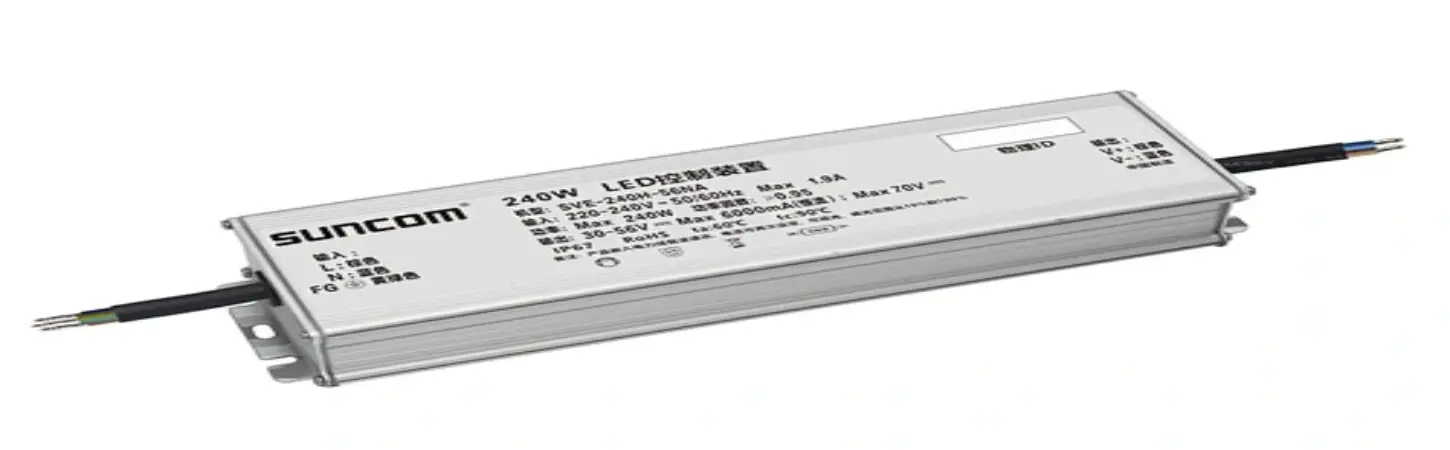
What Are the Components of LED Driver Power Supply?
2024-04-08
The LED driver power supply serves as the cornerstone of LED lamps, comparable to the vital role of the heart in a person's body. Its significance cannot be overstated. To ensure the production of high-quality LED drive power, it is imperative to utilize corresponding high-quality components.
What Are the Specific Components of an LED Driver Power Supply?
An LED driver power supply typically consists of several key components, including:
1.Printed Circuit Board (PCB)
2.Surface Mount Device (SMD) components: SMD resistors, SMD capacitors, SMD diodes, integrated circuits (ICs), etc.
3.Manual insertion: transformer, varistor, electrolytic capacitor, inductor, CBB capacitor, fuse, field-effect transistor (FET), terminals, etc.
2.Surface Mount Device (SMD) components: SMD resistors, SMD capacitors, SMD diodes, integrated circuits (ICs), etc.
3.Manual insertion: transformer, varistor, electrolytic capacitor, inductor, CBB capacitor, fuse, field-effect transistor (FET), terminals, etc.
Printed Circuit Board (PCB)

A Printed Circuit Board (PCB), also known as a printed wiring board or simply a printed board, stands as a crucial component within the electronics industry. Whenever electronic components, including integrated circuits, are involved, printed boards play a vital role in facilitating electrical interconnections among these components. Comprising an insulating base plate, connecting leads, and the assembly and soldering of electronic elements, a printed wiring board serves dual functions: providing a conductive circuit and serving as an insulating base. The quality of a PCB can be assessed based on factors such as its size and thickness, as well as the appearance of solder joints, including aspects such as light and color.
SMD Resistor

Chip resistors, also known as surface mount resistors or chip fixed resistors, belong to the category of metal glaze resistors. They are manufactured by blending metal powder with glass glaze powder and then printing the mixture onto a substrate using the screen printing method.
These resistors exhibit resistance to humidity and high temperatures, along with a small temperature coefficient. They offer the advantage of significantly saving circuit space and costs, allowing for more refined designs.
Common size specifications for chip resistors include 0202, 0402, 0603, 0805, 1206, 1210, 1812, 2010, and 2512. The standard accuracy of chip resistors is typically 5% or 1%, with a resistance range spanning from 0.1 ohms to 20 megaohms.
These resistors exhibit resistance to humidity and high temperatures, along with a small temperature coefficient. They offer the advantage of significantly saving circuit space and costs, allowing for more refined designs.
Common size specifications for chip resistors include 0202, 0402, 0603, 0805, 1206, 1210, 1812, 2010, and 2512. The standard accuracy of chip resistors is typically 5% or 1%, with a resistance range spanning from 0.1 ohms to 20 megaohms.
SMD Capacitor

SMD capacitors consist of ceramic dielectric layers with printed electrodes, arranged in a staggered manner. Following a single high-temperature sintering process, these layers form a ceramic chip. Metal layers, serving as outer electrodes, are then sealed at both ends of the chip. This process results in a structure akin to a monolith, hence earning the capacitor the moniker "monolithic capacitor."
Chip capacitors are sized using two different measurement systems: inches and millimeters. The series models of chip capacitors include 0402, 0603, 0805, 1206, 1210, 1808, 1812, 2010, 2225, and 2512.
Chip capacitors are sized using two different measurement systems: inches and millimeters. The series models of chip capacitors include 0402, 0603, 0805, 1206, 1210, 1808, 1812, 2010, 2225, and 2512.
SMD Diode

An SMD diode is an electronic component designed for unidirectional current flow. It consists of a semiconductor material with a PN junction and two lead terminals. The diode exhibits conductivity in one direction based on the polarity of the applied voltage.
IC

The integrated circuit (IC) in the LED driver power supply serves a role akin to a computer's CPU, acting as the primary component responsible for regulating output voltage and current. It incorporates various protection mechanisms, such as open-circuit protection, short-circuit protection, over-temperature protection, over-voltage protection, under-voltage protection, and FB (feedback) short-circuit protection. The IC typically comes in a DIP-8 package.
Switch Transformer

A transformer is an electrical device that operates based on the principle of electromagnetic induction. When an alternating current (AC) is applied to the primary coil of the transformer, it induces an alternating magnetic flux in the magnetic core. This flux, in turn, generates one or more secondary voltages as the alternating current is converted into high-frequency alternating current and supplied to the transformer for further transformation.
Varistor

A varistor is a resistive component characterized by nonlinear volt-ampere characteristics, primarily employed for voltage clamping in instances of circuit overvoltage. It absorbs excessive current to safeguard sensitive devices. Leveraging the varistor's nonlinear properties, when overvoltage occurs across its terminals, it effectively clamps the voltage to a relatively fixed value, ensuring subsequent circuit protection.
Electrolytic Capacitor

The metal foil within an electrolytic capacitor serves as the positive electrode, while the oxide film adjacent to this metal constitutes the dielectric. The negative electrode comprises conductive materials, electrolytes, and additional components. Since the electrolyte plays a central role in the negative electrode, the capacitor derives its name from it. It's crucial to ensure correct polarity when connecting electrolytic capacitors, as they cannot be reversed.
In LED driver power design, the choice of electrolytic capacitor directly impacts the driver's lifespan. Capacitors rated at different temperatures, such as 105°C with lifespans of 2000H and 8000H, exhibit varying durability. Moreover, for identical power supplies, the service life of electrolytic capacitors differs between temperatures; for instance, those rated at 85°C versus 105°C.
In LED driver power design, the choice of electrolytic capacitor directly impacts the driver's lifespan. Capacitors rated at different temperatures, such as 105°C with lifespans of 2000H and 8000H, exhibit varying durability. Moreover, for identical power supplies, the service life of electrolytic capacitors differs between temperatures; for instance, those rated at 85°C versus 105°C.
Inductance

Inductance serves as an energy storage component in numerous applications. Apart from energy storage, it also functions as a choke, voltage transformer, filter, and resonator. When an alternating current flows through a wire, it generates an alternating magnetic field around it. Inductance operates by storing energy through the conversion of magnetism into electricity and vice versa. This fundamental principle underpins the operation of inductance.
CBB Capacitor

CBB capacitors, also known as polypropylene capacitors, typically offer capacitance ranging from 10pF to 10μF and rated voltages between 63V and 2000V. These capacitors are adept at suppressing power electromagnetic interference, lowering impedance, and can serve as substitutes for many polystyrene or mica capacitors in circuits with heightened specifications. While they perform similarly to polystyrene capacitors, they boast a smaller size, albeit with slightly reduced stability.
Fuse

LED driver power supplies commonly utilize fuses available in two forms: round and square, chosen based on the PCB board's spatial requirements. For instance, in our company's LED driver power supply designs, we opt for square fuse tubes. These tubes feature explosion-proof and flame-retardant shells. In instances of excessive current, the fuse tube will blow out, providing protection. Unlike standard glass tube fuses that shatter upon blowing, square fuses remain intact.
FET

A FET, or Field-Effect Transistor, is a semiconductor device that regulates the current in the output loop through the electric field effect of the control input loop. It falls under the category of voltage-controlled semiconductor devices. FETs offer several advantages including high input resistance, low noise, low power consumption, large dynamic range, ease of integration, absence of secondary breakdown phenomenon, and a wide safe working area.
Terminal

The wiring terminal found on the LED driver power supply is a component employed to establish electrical connections.
The above are the basic components of an LED driver led power supply. When designing an LED power supply led driver, it is important to consider the quality and cost of each component. If you wish to order these components, please feel free to contact us.
The above are the basic components of an LED driver led power supply. When designing an LED power supply led driver, it is important to consider the quality and cost of each component. If you wish to order these components, please feel free to contact us.
LED Driver Vs Ballast
LED Drivers/Power Supplies FAQ
Related Article
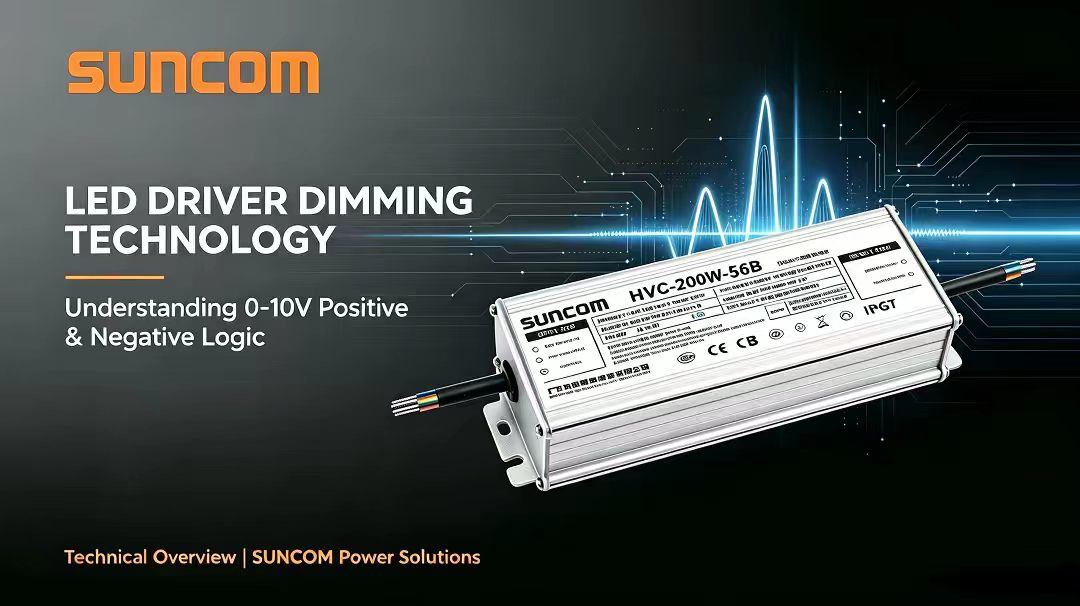
This article explains the core principles of both dimming logics, their hardware implementations, and key practical considerations for field deployment.
Understanding Positive and Negative Logic Dimming in LED Driver
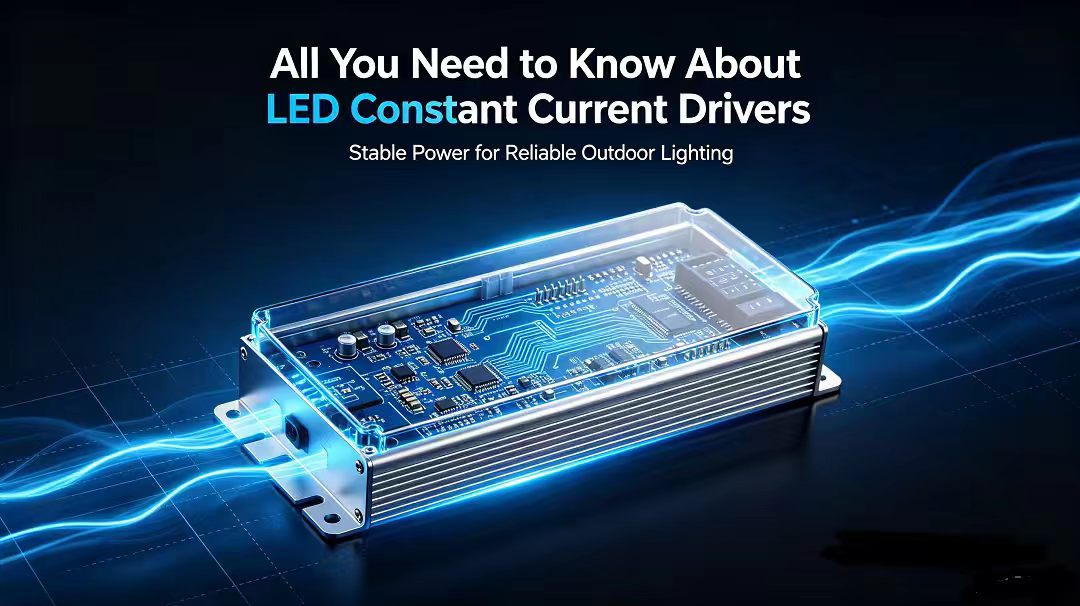
Understanding LED Constant Current LED driver for Outdoor Lighting
LED Constant Current Drivers: The Core Heart of Outdoor Luminaires