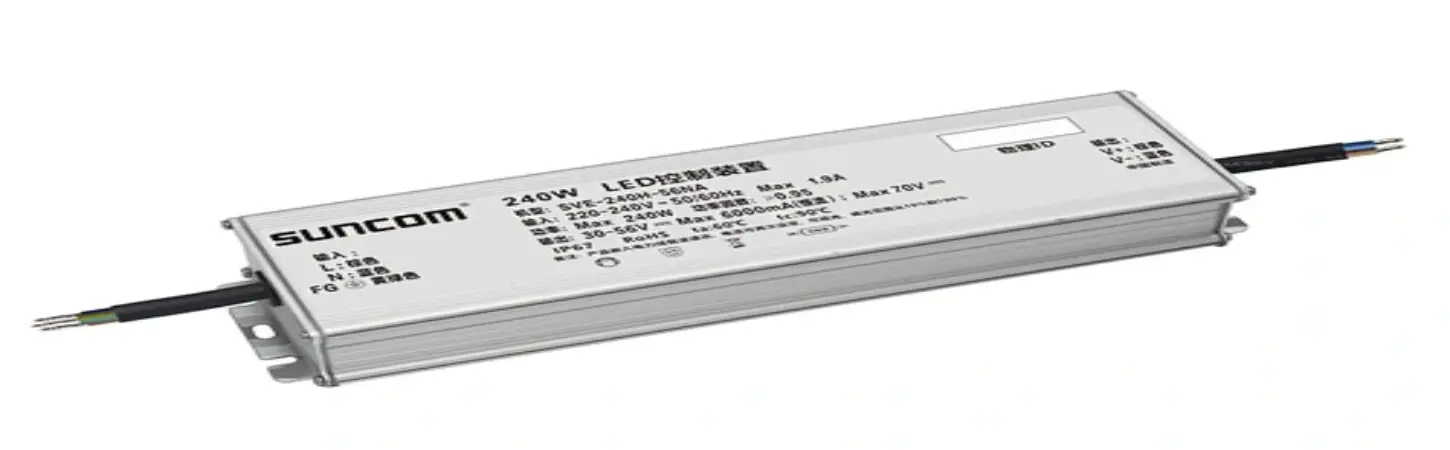
LED Drivers: What You Need to Know
2023-12-11
In LED technology, LED drivers can be a confusing part, as there are so many different types and variations that it can be overwhelming at times. Because of that, I'm going to write a quick post explaining the types, what makes them different, and what you need to keep in mind when choosing LED drivers.
You might wonder what an LED driver is? In essence, an LED driver is a piece of electrical equipment that regulates the amount of power given to an LED, or a string of LEDs. It is an essential part of an LED circuit and a failure without it will cause a malfunction in the system.
Using one is vital in preventing damage to your LEDs because the forward voltage (Vf) of a high-power LED changes with temperature. LEDs draw more current as their forward voltage decreases with increasing temperature. Forward voltage is the amount of volts required for a light emitting diode to conduct electricity and light up. The LED will continue to get hotter and draw more current until it burns itself out. LED drivers are self-contained power supplies that have outputs that correspond to the electrical characteristics of the LED(s). Due to the constant current LED driver's ability to compensate for changes in the forward voltage while delivering a constant current to the LED, thermal runaway is avoided.
You might wonder what an LED driver is? In essence, an LED driver is a piece of electrical equipment that regulates the amount of power given to an LED, or a string of LEDs. It is an essential part of an LED circuit and a failure without it will cause a malfunction in the system.
Using one is vital in preventing damage to your LEDs because the forward voltage (Vf) of a high-power LED changes with temperature. LEDs draw more current as their forward voltage decreases with increasing temperature. Forward voltage is the amount of volts required for a light emitting diode to conduct electricity and light up. The LED will continue to get hotter and draw more current until it burns itself out. LED drivers are self-contained power supplies that have outputs that correspond to the electrical characteristics of the LED(s). Due to the constant current LED driver's ability to compensate for changes in the forward voltage while delivering a constant current to the LED, thermal runaway is avoided.
Things to Consider Before Selecting an LED Driver
- What type of LEDs are being used and how many?
Find out forward voltage, recommended driving current, etc.
- Do I need a constant current LED driver or a constant voltage LED driver?
We go over constant current vs. constant voltage here.
- What type of power will be used? (DC, AC, batteries, etc.)
Running from AC?
- What are the space limitations?
Working in a tight area? Not a lot of voltage to work with?
- What are the main goals of the application?
Size, cost, efficiency, performance, etc.
- Any special features needed?
Dimming, pulsing, microprocessor control, etc.
Two Main Types of Drivers
There are two primary categories of LED drivers: those designed for low voltage DC input power (typically 5-36VDC) and those configured for high voltage AC input power (usually 90-277VAC). LED drivers utilizing high-voltage AC power are commonly referred to as Off-Line drivers or AC LED drivers. While the general recommendation favors the use of low voltage DC input LED drivers in most applications, it's noteworthy that, even if your input source is high voltage AC, employing an additional switching power supply can enable the utilization of a DC input driver. Opting for low voltage DC drivers is advisable due to their exceptional efficiency and reliability.
For smaller-scale applications, low voltage DC drivers present a more versatile choice, offering a wider array of dimming and output options compared to their high voltage AC counterparts. This versatility provides greater flexibility in tailoring the driver to the specific needs of your application. Conversely, when dealing with substantial general lighting projects for residential or commercial purposes, exploring how AC drivers may be better suited for the job is recommended.
For smaller-scale applications, low voltage DC drivers present a more versatile choice, offering a wider array of dimming and output options compared to their high voltage AC counterparts. This versatility provides greater flexibility in tailoring the driver to the specific needs of your application. Conversely, when dealing with substantial general lighting projects for residential or commercial purposes, exploring how AC drivers may be better suited for the job is recommended.
Second Thing You Should Know
Secondly, you need to know the drive current that you want to put on the LED. High drive currents will result in more light from the LED, but will require more power to run. To avoid burning the LED out with too much current or excess heat, you should know your LED's specs so you know the recommended drive current and heat sink requirements. The lighting application should also be tailored to meet your needs. It is necessary to choose a driver with dimming capabilities if you want dimming.
A Little Bit About Dimming
LED dimming varies depending on the power source, so I'll discuss both DC and AC dimming options so we can better understand how to dim LEDs.
DC Dimming
Low voltage DC-powered drivers offer convenient dimming options through different methods. The simplest dimming solution for these drivers involves using a potentiometer, providing a full dimming range of 0-100%.
This method is particularly recommended when you have a single driver in your circuit. However, if multiple drivers are being dimmed from a single potentiometer, you can determine the potentiometer value using the formula – KΩ/N – where K represents the potentiometer value, and N is the number of drivers in use. For instance, our wired BuckPucks come with a 5K turn knob potentiometer for dimming, and we also offer a 20K potentiometer suitable for use with our BuckBlock and FlexBlock Drivers. Simply connect the dimming ground wire to the center prong and the dimming wire to one side or the other (the choice of side determines the direction to turn the knob for dimming).
Alternatively, your second dimming option is to utilize a 0-10V wall dimmer, such as our A019 Low Voltage Dimming Control. This method is preferable when dealing with multiple units, as the 0-10V dimmer can effectively work with several drivers simultaneously. Connect the dimming wires directly to the input of the driver, and you're ready to proceed.
This method is particularly recommended when you have a single driver in your circuit. However, if multiple drivers are being dimmed from a single potentiometer, you can determine the potentiometer value using the formula – KΩ/N – where K represents the potentiometer value, and N is the number of drivers in use. For instance, our wired BuckPucks come with a 5K turn knob potentiometer for dimming, and we also offer a 20K potentiometer suitable for use with our BuckBlock and FlexBlock Drivers. Simply connect the dimming ground wire to the center prong and the dimming wire to one side or the other (the choice of side determines the direction to turn the knob for dimming).
Alternatively, your second dimming option is to utilize a 0-10V wall dimmer, such as our A019 Low Voltage Dimming Control. This method is preferable when dealing with multiple units, as the 0-10V dimmer can effectively work with several drivers simultaneously. Connect the dimming wires directly to the input of the driver, and you're ready to proceed.
AC Dimming
The dimming options for AC power drivers vary based on the driver. Most AC drivers support 0-10V dimming, as we discussed above. There are also Mean Well and Phihong LED drivers available that offer TRIAC dimming so that they can work with many leading edge and trailing edge dimmers. As a result of this, LEDs will be able to work with some of the most popular residential dimming systems like Lutron and Leviton that are so popular in the residential market.
How Many LEDs Can You Run with a Driver?
The number of LEDs you can run with a driver depends on several factors, and it's important to consider the specifications of both the LED driver and the LEDs themselves. Here are the key factors to take into account:
1.LED Driver Output Voltage
LED drivers are designed to provide a specific output voltage. To determine the number of LEDs you can run in series, you'll need to divide the total output voltage of the driver by the forward voltage drop of each LED. Running LEDs in series means that the same current passes through each LED, and the total forward voltage adds up.
2.Forward Voltage of LEDs:
Each LED has a forward voltage, which is the voltage required for the LED to operate. When connecting LEDs in series, the forward voltages add up. For example, if your driver provides 12V and each LED has a forward voltage of 3V, you can theoretically connect four LEDs in series (12V/3V = 4 LEDs).
3.LED Driver Current Output
LED drivers also specify an output current, measured in amperes (A) or milliamperes (mA). The total current drawn by the LEDs must not exceed the driver's maximum output current. To determine the number of LEDs in a series circuit, divide the driver's output current by the forward current of each LED.
4.Parallel Circuits
If you want to connect more LEDs, you can also consider connecting multiple series circuits in parallel. Each series circuit should have the correct forward voltage and current specifications.
Top LED Driver Manufacturer| Gdsuncom
In conclusion, when considering LED drivers for your lighting projects, it's crucial to partner with a reliable and top-tier manufacturer. Gdsuncom stands out as a leading LED driver manufacturer, known for its commitment to innovation, quality, and cutting-edge technology.
With a reputation for excellence in the industry, Gdsuncom delivers a comprehensive range of LED drivers that meet the diverse needs of various applications. Whether you're working on residential, commercial, or industrial projects, Gdsuncom's LED drivers offer efficiency, reliability, and advanced features to enhance your lighting systems.
Choosing Gdsuncom as your LED driver provider ensures access to state-of-the-art solutions, backed by a team of experts dedicated to customer satisfaction. Their commitment to sustainability and energy efficiency aligns seamlessly with the demands of modern lighting applications.
In the ever-evolving landscape of LED technology, Gdsuncom remains at the forefront, continually pushing boundaries and setting new standards for LED driver performance. When you opt for Gdsuncom, you're not just investing in a product; you're investing in the future of efficient and environmentally conscious lighting solutions.
For your next lighting project, trust Gdsuncom as the top LED driver manufacturer to illuminate your path to success. Elevate your lighting systems with the reliability and innovation that Gdsuncom brings to every product, ensuring brilliance and efficiency in every application.
With a reputation for excellence in the industry, Gdsuncom delivers a comprehensive range of LED drivers that meet the diverse needs of various applications. Whether you're working on residential, commercial, or industrial projects, Gdsuncom's LED drivers offer efficiency, reliability, and advanced features to enhance your lighting systems.
Choosing Gdsuncom as your LED driver provider ensures access to state-of-the-art solutions, backed by a team of experts dedicated to customer satisfaction. Their commitment to sustainability and energy efficiency aligns seamlessly with the demands of modern lighting applications.
In the ever-evolving landscape of LED technology, Gdsuncom remains at the forefront, continually pushing boundaries and setting new standards for LED driver performance. When you opt for Gdsuncom, you're not just investing in a product; you're investing in the future of efficient and environmentally conscious lighting solutions.
For your next lighting project, trust Gdsuncom as the top LED driver manufacturer to illuminate your path to success. Elevate your lighting systems with the reliability and innovation that Gdsuncom brings to every product, ensuring brilliance and efficiency in every application.
How to Connect Dimmable LED Driver
How Do I Choose the Right LED Driver?
Related Article
This article explains the core principles of both dimming logics, their hardware implementations, and key practical considerations for field deployment.
Understanding Positive and Negative Logic Dimming in LED Driver
Understanding LED Constant Current LED driver for Outdoor Lighting
LED Constant Current Drivers: The Core Heart of Outdoor Luminaires