The Ultimate Guide to Smart Streetlights
2024-05-15
A smart streetlight represents a cutting-edge advancement in public lighting, integrating technology like cameras, light-sensing photocells, and various sensors for real-time monitoring. Often termed as adaptive or intelligent street lighting, this innovative system plays a pivotal role in the evolution of smart cities.
Beyond just providing adequate illumination tailored to local conditions, the deployment of intelligent lighting enhances citizen satisfaction by bolstering security and safety measures. Furthermore, it offers substantial cost savings for municipalities through reduced power consumption and minimized maintenance of lighting infrastructure. Moreover, the outdoor lighting network serves as a foundational element for a multitude of Internet of Everything (IoE) applications, spanning weather monitoring, pollution tracking, and traffic management.
This comprehensive resource delves into the realm of smart streetlights, exploring their functionality, key attributes, and myriad benefits.
Beyond just providing adequate illumination tailored to local conditions, the deployment of intelligent lighting enhances citizen satisfaction by bolstering security and safety measures. Furthermore, it offers substantial cost savings for municipalities through reduced power consumption and minimized maintenance of lighting infrastructure. Moreover, the outdoor lighting network serves as a foundational element for a multitude of Internet of Everything (IoE) applications, spanning weather monitoring, pollution tracking, and traffic management.
This comprehensive resource delves into the realm of smart streetlights, exploring their functionality, key attributes, and myriad benefits.

How Do Smart Streetlights Work?
A smart streetlight operates by automatically adjusting the light intensity of connected streetlights through a sophisticated algorithm and external sensor inputs. These inputs encompass factors such as local sunrise/sunset times, daily light level schedules, pre-programmed light scenes, human presence, traffic, and weather conditions.
Typically, a conventional or LED streetlight is outfitted with an outdoor lamp controller (OLC) to facilitate this functionality. The primary role of the OLC is to exchange commands with the connected streetlight, including switching, dimming, scheduling, and maintenance messages.
Moreover, the OLC serves as a crucial link between the streetlight and a central management system (CMS), often web-based software. It gathers luminaire data and shares it with the CMS for comprehensive management.
Presently, streetlight controllers are available in various forms:
Typically, a conventional or LED streetlight is outfitted with an outdoor lamp controller (OLC) to facilitate this functionality. The primary role of the OLC is to exchange commands with the connected streetlight, including switching, dimming, scheduling, and maintenance messages.
Moreover, the OLC serves as a crucial link between the streetlight and a central management system (CMS), often web-based software. It gathers luminaire data and shares it with the CMS for comprehensive management.
Presently, streetlight controllers are available in various forms:
- Nema Controller: Equipped with Nema 5-pin or Nema 7-pin receptacles compliant with ANSI C136.41 standards.
- Zhaga Controller: Features a simpler 4-pin Zhaga (book 18) socket, often compatible with Zhaga D4i standards.
- Luminaire-Mount Controller: Installed within the streetlight luminaire, usually alongside the LED driver and connected via analog/DALI dimming wires.
- Pole-Mount Controller: Positioned on the street pole, with dimming wires connected to the LED driver at the luminaire's junction box. This option is suitable for situations where the luminaire lacks a Nema or Zhaga socket or internal space for housing the controller. Pole-mounted controllers offer cost-effective control for poles with multiple luminaires, enabling centralized management.
Nema and Zhaga-based controllers are popular choices due to their plug-and-play compatibility with streetlight fixtures. The adoption of the Zhaga D4i standard is growing in new smart lighting projects due to its increasing popularity and ease of installation.
Benefits of Smart Streetlights
Smart streetlights present a myriad of advantages that hold the potential to transform our urban landscapes and communities. Below are some key benefits:
- Enhanced Energy Efficiency: Leveraging LED technology, smart streetlights consume less energy compared to conventional counterparts. Moreover, they feature motion sensors and dimming capabilities, enabling them to adjust brightness levels based on real-time conditions, further optimizing energy usage.
- Cost Savings: By dynamically adjusting luminosity, smart streetlights can streamline energy consumption, leading to substantial cost savings over time. Additionally, their prolonged lifespan reduces maintenance and replacement expenses, offering significant financial benefits.
- Improved Safety Measures: Equipped with advanced technologies like cameras, sensors, and sound detection systems, smart streetlights facilitate real-time environmental monitoring. This enables the early detection of potential safety hazards or emergencies, enhancing overall public safety and enabling swift responses from law enforcement or emergency services.
- Integration with Artificial Intelligence (AI): Smart streetlights integrate seamlessly with AI technologies, fostering innovative applications with immediate and future implications. For instance, AI-powered cameras can swiftly identify multiple individuals exiting a building, serving as an early indicator of potential threats.
- Enhanced Traffic Management: Through sensor integration and data analytics, smart streetlights gather and analyze traffic patterns. This data-driven approach enables optimized traffic flow, congestion reduction, and heightened transportation efficiency.
- Commitment to Environmental Sustainability: By curbing energy consumption and greenhouse gas emissions, smart streetlights contribute significantly to environmental sustainability objectives. Additionally, they can utilize solar panels to power lighting systems, further reducing carbon footprints and promoting eco-friendly practices.
- Integration into Smart City Frameworks: Serving as foundational infrastructure, smart streetlights seamlessly integrate with other smart devices and systems within urban environments. This integration spans various domains, including waste management, parking, and public transportation, fostering a connected ecosystem that enhances overall urban functionality and quality of life.
- Elevated Quality of Life: Well-lit streets foster a sense of security and comfort for residents and visitors alike, thereby enhancing the overall livability and attractiveness of cities. Smart streetlights play a pivotal role in creating inviting and safe urban environments that promote a high quality of life.
Disadvantages of Smart Streetlights
While the long-term benefits of upgrading lighting networks are evident, several challenges need addressing. Despite the cost savings smart streetlights offer over time, the initial investment is substantial. Notably, streetlighting expenses often constitute over 40% of a city's energy budget. However, transitioning from halogen to basic LED luminaires can immediately slash costs by up to 80%.
Moreover, the abundance of applications and technology platforms complicates decision-making. The absence of standardized practices across networks adds another layer of complexity.
A significant hurdle lies in the limited awareness among consumers regarding the functionalities and advantages of smart streetlights. Lastly, compliance with federal and utility regulations is imperative for the successful implementation of smart streetlights.
Moreover, the abundance of applications and technology platforms complicates decision-making. The absence of standardized practices across networks adds another layer of complexity.
A significant hurdle lies in the limited awareness among consumers regarding the functionalities and advantages of smart streetlights. Lastly, compliance with federal and utility regulations is imperative for the successful implementation of smart streetlights.
What Are the Most Common Communication Technologies Used by a Smart Street Light?
The most common communication technologies used by smart street lights include:
- Wireless Communication Protocols: Wireless communication protocols such as Zigbee, LoRaWAN (Long Range Wide Area Network), and NB-IoT (Narrowband Internet of Things) are frequently used for connecting smart street lights to a central management system or network. These protocols offer long-range connectivity, low power consumption, and support for large-scale deployments.
- Power Line Communication (PLC): Power Line Communication utilizes existing power lines to transmit data between smart street lights and the central management system. PLC can offer a cost-effective solution for communication, leveraging the infrastructure already in place. However, it may face limitations in terms of bandwidth and interference.
- Cellular Communication: Cellular communication, using technologies such as 4G LTE and increasingly 5G, enables smart street lights to connect to the internet and communicate with a central management system. Cellular networks provide widespread coverage and high data speeds, making them suitable for urban environments and remote locations where other communication options may be limited.
- Ethernet and Wi-Fi: Some smart street lights may utilize Ethernet or Wi-Fi connections for communication, especially in areas with reliable network infrastructure. Ethernet offers high-speed, stable connectivity, while Wi-Fi provides flexibility and ease of deployment in urban settings.
- Mesh Networking: Mesh networking allows smart street lights to communicate with each other in a decentralized manner, forming a self-healing network. This approach improves reliability and coverage, especially in areas with limited connectivity or where traditional communication methods are impractical.
What Types of Sensors Can Be Connected to a Smart Streetlight?
Several types of sensors can be connected to a smart streetlight to enable various functionalities and applications. Some common sensors include:
- Light Sensors: Light sensors, also known as photocells or lux sensors, measure ambient light levels. They enable smart streetlights to adjust their brightness based on natural lighting conditions, helping to save energy and enhance visibility during low-light conditions.
- Motion Sensors: Motion sensors detect movement in their vicinity and can trigger the smart streetlight to illuminate or increase its brightness when activity is detected. These sensors enhance safety and security by providing illumination in response to pedestrian or vehicular movement.
- Environmental Sensors: Environmental sensors measure parameters such as temperature, humidity, air quality, and noise levels. They enable smart streetlights to gather real-time environmental data, which can be used for environmental monitoring, pollution detection, and urban planning purposes.
- Presence Sensors: Presence sensors detect the presence of people or objects within a certain range. They can be used to detect pedestrian or vehicle presence at intersections, crossings, or parking areas, allowing the smart streetlight to adjust its lighting accordingly and improve safety.
- Traffic Sensors: Traffic sensors monitor vehicular traffic flow, speed, and congestion levels. They help optimize traffic management and signal timing, reducing congestion and improving transportation efficiency.
- Camera Sensors: Camera sensors capture images or videos of their surroundings. They enable visual surveillance, traffic monitoring, license plate recognition, and video analytics for security, traffic management, and law enforcement purposes.
- Sound Sensors: Sound sensors, also known as acoustic sensors or microphones, detect sound levels and patterns. They can be used for noise monitoring, detecting traffic accidents or emergencies, and identifying abnormal or suspicious sounds in the vicinity.
- Vibration Sensors: Vibration sensors detect vibrations or seismic activity in their surroundings. They can be used for structural health monitoring of infrastructure, detecting earthquakes or tremors, and monitoring traffic-induced vibrations in roads or bridges.
Conclusion
Smart streetlights represent a crucial step towards fostering connectivity and sustainability in urban landscapes. With endless possibilities and integration opportunities, these automated luminaires serve as an ideal entry point into the realm of smart city infrastructure. Their scalability, versatility, and compatibility with diverse technologies make them indispensable assets for cities and towns aspiring to evolve and embrace data-driven decision-making processes.
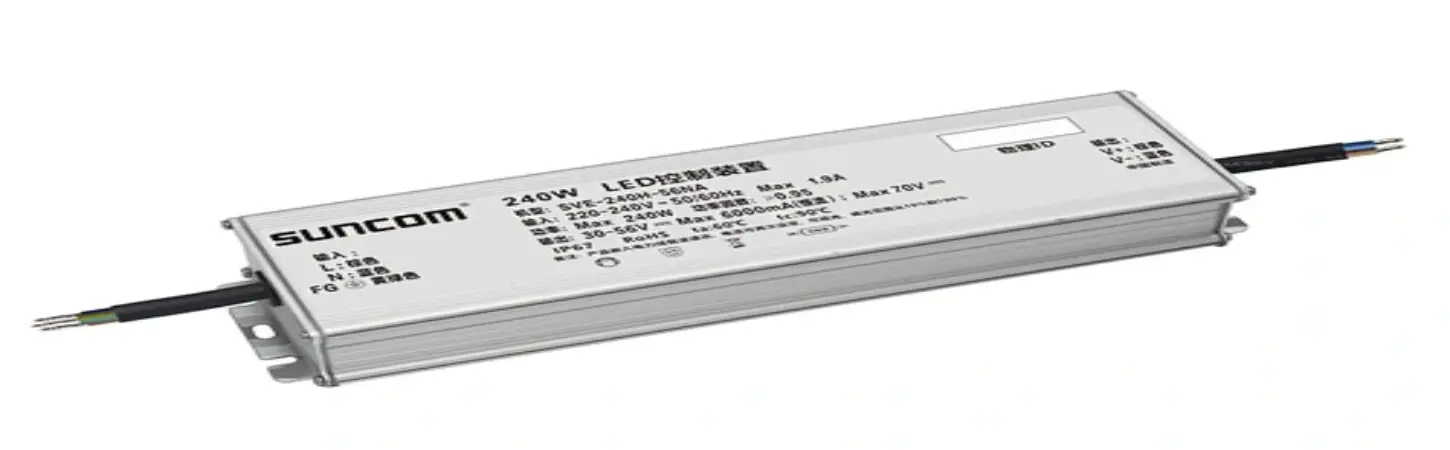
Guangdong Suncom Power's outdoor smart LED Driver is the premier choice for controlling smart street lights. Explore our LED current driver application page to discover how our products elevate performance.
Guangdong Suncom Power's outdoor smart LED Driver is the premier choice for controlling smart street lights. Explore our LED current driver application page to discover how our products elevate performance.
Using LED Drivers to Provide Flicker-Free Lighting for Health and Comfort
What Is a Programmable LED Driver?
Related Article
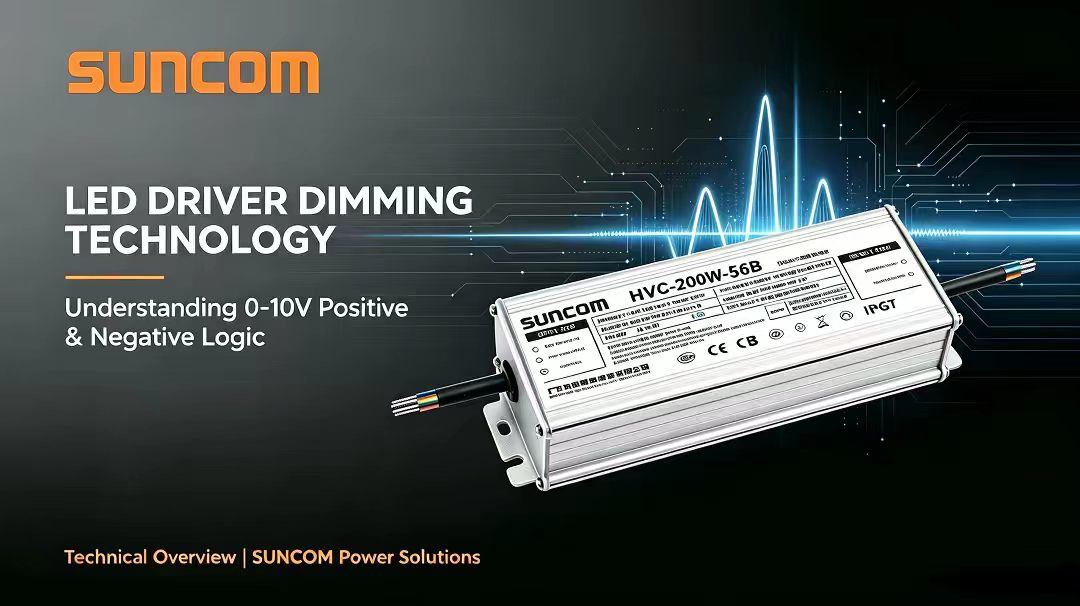
This article explains the core principles of both dimming logics, their hardware implementations, and key practical considerations for field deployment.
Understanding Positive and Negative Logic Dimming in LED Driver
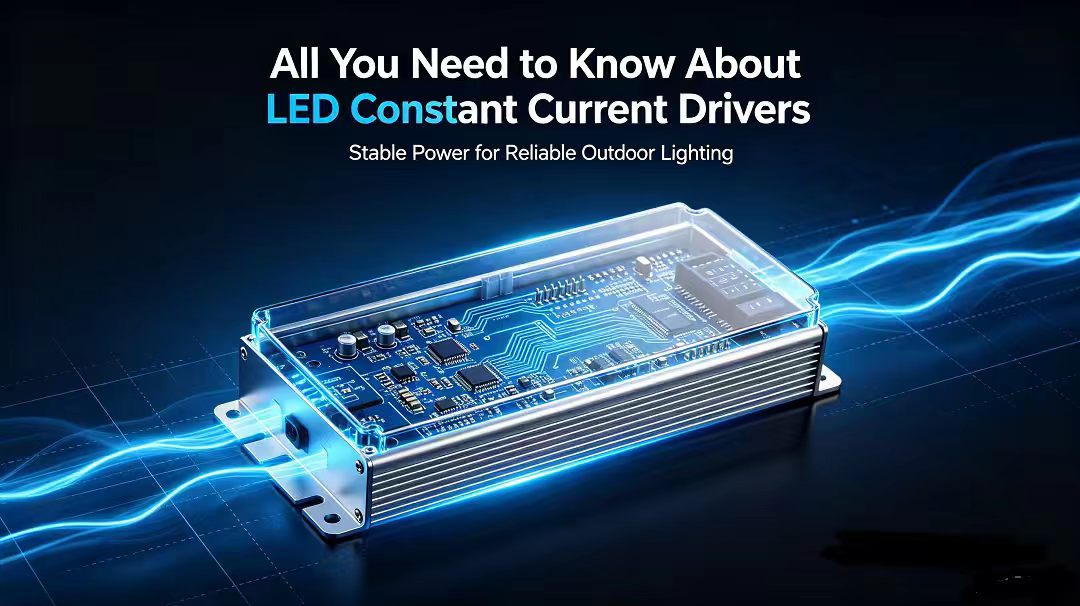
Understanding LED Constant Current LED driver for Outdoor Lighting
LED Constant Current Drivers: The Core Heart of Outdoor Luminaires