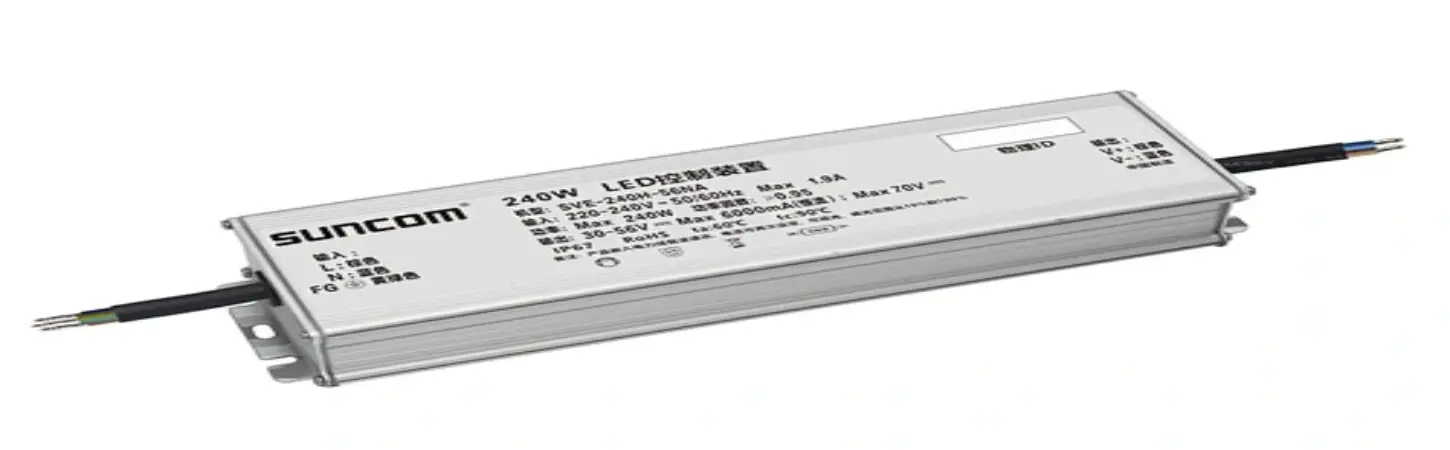
The Difference Between LED Drivers and Electronic Transformers
2024-03-26
Around the world, led lighting is everywhere, and the key is to use the right power supply to maintain a stable, balanced light. In terms of lights, there are two types of lights: led drivers and electronic transformers. When we have a lamp, which power supply should we choose? LED drivers or electronic transformers?In this article, we delve into the dissimilarities between LED drivers and electronic transformers, shedding light on their distinct functionalities and applications.
What Is an LED Driver?
An LED driver is an essential component of LED lighting systems, serving as a crucial intermediary between the electrical power source and the LED fixture itself. Essentially, an LED driver regulates the flow of electrical current to the LED, ensuring stable operation and optimal performance.
Functionality:
LEDs require a constant and specific level of current and voltage to function efficiently and maintain their longevity. However, the electrical power supplied from standard sources like mains electricity is typically alternating current (AC), which is unsuitable for powering LEDs directly. LED drivers bridge this gap by converting the AC power into direct current (DC) while simultaneously controlling the voltage and current levels to match the requirements of the LED fixture.
Key Components:
1.Rectification Circuitry: LED drivers incorporate rectification components such as diodes or bridge rectifiers to convert AC power into DC power, ensuring a steady and consistent supply of electricity to the LEDs.
2.Voltage Regulation: LED drivers maintain a constant voltage output, typically 12V or 24V DC, to ensure uniform brightness levels and prevent damage to the LEDs from voltage fluctuations.
3.Current Regulation: LED drivers control the flow of electrical current to the LEDs, delivering the precise amount of current required for optimal performance and efficiency.
4.Protection Features: Many LED drivers come equipped with built-in protection mechanisms such as overcurrent protection, overvoltage protection, and short-circuit protection to safeguard both the LED fixture and the driver itself from potential damage.
2.Voltage Regulation: LED drivers maintain a constant voltage output, typically 12V or 24V DC, to ensure uniform brightness levels and prevent damage to the LEDs from voltage fluctuations.
3.Current Regulation: LED drivers control the flow of electrical current to the LEDs, delivering the precise amount of current required for optimal performance and efficiency.
4.Protection Features: Many LED drivers come equipped with built-in protection mechanisms such as overcurrent protection, overvoltage protection, and short-circuit protection to safeguard both the LED fixture and the driver itself from potential damage.
Types of LED Drivers:
- Constant Current LED Drivers: These drivers maintain a consistent current output regardless of fluctuations in voltage, ensuring uniform brightness levels across multiple LEDs connected in series.
- Constant Voltage LED Drivers: Constant voltage drivers provide a stable voltage output while allowing the current to vary based on the requirements of the LED fixture. These drivers are commonly used in applications where multiple LEDs are connected in parallel.
Applications:
LED drivers find widespread use in various lighting applications, including residential, commercial, and industrial settings. They are integral to LED luminaires such as LED bulbs, downlights, strip lights, and outdoor fixtures, providing the necessary power and control to illuminate spaces effectively.
What Is an Electronic Transformer?
An electronic transformer is a compact and efficient device used to convert high-voltage alternating current (AC) power to low-voltage AC power. Unlike traditional iron-core transformers, electronic transformers utilize electronic circuitry to achieve voltage transformation, making them particularly suited for low-voltage lighting applications such as halogen lighting systems.
Functionality:
Electronic transformers function by employing high-frequency electronic switching circuits to step down the voltage supplied from mains electricity to levels suitable for powering low-voltage lighting fixtures. These transformers typically operate at frequencies ranging from several kilohertz to tens of kilohertz, allowing for smaller transformer sizes and greater efficiency compared to their iron-core counterparts.
Key Components:
1.High-Frequency Switching Circuitry: Electronic transformers incorporate electronic components such as transistors, diodes, and capacitors to switch the input voltage rapidly, facilitating efficient voltage conversion.
2.Feedback Mechanisms: Many electronic transformers feature feedback mechanisms that monitor the output voltage and adjust the switching frequency accordingly to maintain a stable output voltage, ensuring consistent illumination levels.
3.Safety Features: Electronic transformers often include safety features such as short-circuit protection, overload protection, and thermal protection to safeguard both the transformer and the connected lighting fixtures from damage.
2.Feedback Mechanisms: Many electronic transformers feature feedback mechanisms that monitor the output voltage and adjust the switching frequency accordingly to maintain a stable output voltage, ensuring consistent illumination levels.
3.Safety Features: Electronic transformers often include safety features such as short-circuit protection, overload protection, and thermal protection to safeguard both the transformer and the connected lighting fixtures from damage.
Advantages:
1.Compact Size: Electronic transformers are significantly smaller and lighter than traditional iron-core transformers, making them ideal for space-constrained installations.
2.Efficiency: The high-frequency switching technology employed by electronic transformers results in minimal energy losses, leading to higher overall efficiency and reduced energy consumption.
3.Dimming Compatibility: Many electronic transformers are compatible with dimmer switches, allowing users to adjust the brightness of compatible lighting fixtures according to preference.
4.Instant Start: Electronic transformers provide instant ignition and stable operation without the need for warm-up time, ensuring immediate illumination when powered on.
2.Efficiency: The high-frequency switching technology employed by electronic transformers results in minimal energy losses, leading to higher overall efficiency and reduced energy consumption.
3.Dimming Compatibility: Many electronic transformers are compatible with dimmer switches, allowing users to adjust the brightness of compatible lighting fixtures according to preference.
4.Instant Start: Electronic transformers provide instant ignition and stable operation without the need for warm-up time, ensuring immediate illumination when powered on.
Applications:
Electronic transformers are commonly used in low-voltage lighting systems, particularly those utilizing halogen bulbs. They are employed in various residential, commercial, and hospitality settings, including track lighting, recessed lighting, pendant lighting, and decorative lighting applications.
Difference Between LED Driver and Electronic Transformers

The disparity between LED drivers and electronic transformers lies primarily in their operational mechanisms. LED drivers function as power converters, transforming the power supply into a specific voltage and current tailored to drive LEDs for light emission, often featuring dimming capabilities to adjust brightness levels. On the other hand, electronic transformers rectify alternating current into direct current, subsequently utilizing electronic components to generate a high-frequency oscillator, which then converts the direct current into high-frequency alternating current. In essence, while LED drivers supply direct current, electronic transformers output alternating current at AC12.
It's essential to note that LED drivers and electronic transformers are not interchangeable due to differences in output and load compatibility, as well as the specific LED lighting applications they serve. LED drivers are commonly employed in panel lights, ceiling lamps, and various lighting fixtures, providing the requisite power for LED illumination. Conversely, electronic transformers find their niche in powering halogen lamps, table lamps, energy-saving lamps, and advertising lamps, among others. Each component is optimized for distinct lighting systems, ensuring efficient operation and compatibility with their respective light sources.
The LED market undergoes constant evolution, necessitating vigilance to ensure your LED lighting requirements are effectively addressed. It's crucial to verify the specifications of your lamps and identify the appropriate LED driver or electronic transformer accordingly. Should you have any inquiries or require guidance on selecting the suitable LED driver, please don't hesitate to reach out to us. We're here to provide assistance and ensure you find the optimal solution for your needs.
LED Drivers/Power Supplies FAQ
What's the Difference Between High Bay and Low Bay Lights
Related Article
This article explains the core principles of both dimming logics, their hardware implementations, and key practical considerations for field deployment.
Understanding Positive and Negative Logic Dimming in LED Driver
Understanding LED Constant Current LED driver for Outdoor Lighting
LED Constant Current Drivers: The Core Heart of Outdoor Luminaires