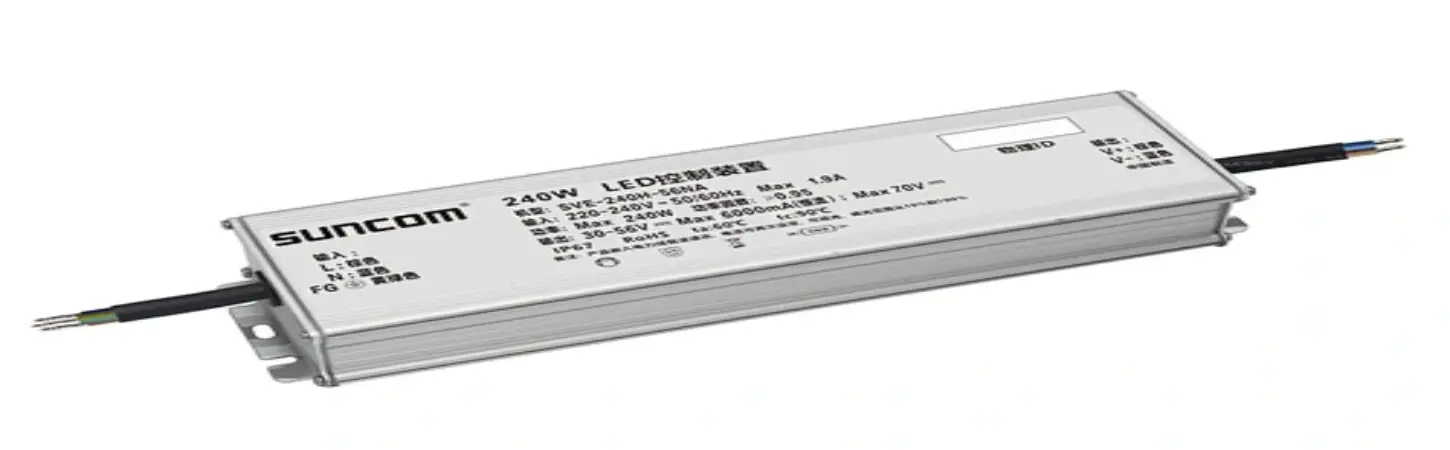
Home /News /Knowledge Sharing /Demystifying Programmable LED Drivers: What Are They and How Do They Work? /
Demystifying Programmable LED Drivers: What Are They and How Do They Work?
2023-10-26
LED drivers have evolved significantly over the years, progressing from constant voltage topologies to the notably more energy-efficient constant current configurations. Constant current drivers directly supply the required current to an LED without the need for an additional current regulator and are readily available in various current output levels. However, as the complexity and diversity of LED luminaires have continued to expand, lighting designers have found themselves seeking more flexibility from their driver hardware, something that the basic constant current topology struggles to provide.
What lighting designers envision is an ideal scenario where the driver hardware can be customized to meet the demands of a diverse range of lighting fixtures within a product line. This adaptability would empower them to respond swiftly to evolving market requirements for new product types, as they would already have the appropriate hardware readily available. This streamlined inventory management approach would eliminate the need to invest time and resources in continually certifying new drivers.
In response to these demands, the industry has introduced a new generation of LED drivers for lighting that can be software programmable, allowing their output to be adjusted based on programming. This heightened flexibility enables many products to fine-tune their output to accommodate the needs of forthcoming, less power-hungry LED products. Unlike the conventional constant current method used in the past, where reducing the output current would result in a decrease in power supplied by the driver, some of the latest drivers are capable of maintaining a constant power output, which proves to be more efficient across all current levels. This innovation marks a significant step forward in the realm of LED drivers, offering enhanced adaptability and efficiency for the dynamic landscape of modern lighting design.
What lighting designers envision is an ideal scenario where the driver hardware can be customized to meet the demands of a diverse range of lighting fixtures within a product line. This adaptability would empower them to respond swiftly to evolving market requirements for new product types, as they would already have the appropriate hardware readily available. This streamlined inventory management approach would eliminate the need to invest time and resources in continually certifying new drivers.
In response to these demands, the industry has introduced a new generation of LED drivers for lighting that can be software programmable, allowing their output to be adjusted based on programming. This heightened flexibility enables many products to fine-tune their output to accommodate the needs of forthcoming, less power-hungry LED products. Unlike the conventional constant current method used in the past, where reducing the output current would result in a decrease in power supplied by the driver, some of the latest drivers are capable of maintaining a constant power output, which proves to be more efficient across all current levels. This innovation marks a significant step forward in the realm of LED drivers, offering enhanced adaptability and efficiency for the dynamic landscape of modern lighting design.
What Is a Programmable LED Driver?
A programmable LED driver is an advanced electronic device designed to power and control Light Emitting Diodes (LEDs) in lighting applications. Unlike traditional LED drivers that offer fixed current or voltage outputs, programmable LED drivers provide users with the flexibility to customize the electrical parameters and performance characteristics of the connected LEDs.
Key features of programmable LED drivers include:
- Adjustable Current: Programmable LED drivers allow users to set the desired output current. This feature is valuable because it enables fine-tuning of LED brightness and power consumption, making it suitable for various lighting scenarios.
- Dimming Capabilities: Many programmable LED drivers support dimming functionality, allowing users to control the LED's light output. This is useful for creating dynamic lighting effects, changing the mood or ambiance in a space, and enhancing energy efficiency.
- Programming Flexibility: Users can configure the driver's parameters through software or hardware, enabling customization of LED performance. These parameters may include current, voltage, color temperature, and even timing for specific lighting effects.
- Compatibility with Various LED Types: Programmable LED drivers can often be used with various LED types, making them versatile for different applications and retrofit projects.
- Dynamic Response: Some programmable drivers are equipped with sensors or interfaces to adapt to changing environmental conditions, like daylight harvesting or occupancy detection, allowing for smart and energy-efficient lighting systems.
- Energy Efficiency: By customizing the LED driver's settings, users can optimize energy consumption, helping to reduce electricity costs and environmental impact.
- Versatility: Programmable LED drivers are ideal for diverse lighting applications, such as commercial, industrial, residential, and architectural lighting, where precise control and adaptability are required.
Benefits of Programmable LED Driver
You can benefit from programmable LED drivers in your home or office. Here are some advantages to acquiring some.
- Their hardware is more flexible and can be used for a wide variety of products.
- With programmable devices, you won't have to spend much time qualifying LED drivers.
- Due to their constant output features, they have a higher level of power availability.
With programmable LED drivers, electrical circuits can be built more efficiently without extra equipment or special training. High voltages are converted to safe levels by using programmable LED drivers.
How Do You Program a Programmable LED Driver?
Programming a programmable LED driver typically involves using specialized software or hardware tools provided by the manufacturer. The exact process may vary depending on the brand and model of the LED driver, but the following general steps can guide you through the programming procedure:
1. Obtain the Necessary Tools:
Check if the manufacturer provides programming software or hardware tools for your specific LED driver model. These tools are typically available for download from the manufacturer's website or may be included with the driver's purchase.
2. Connect to the LED Driver:
Ensure that the LED driver is correctly connected to a power source and the LEDs you wish to program. Follow the manufacturer's guidelines for proper electrical connections.
3. Install the Programming Software (if applicable):
If the manufacturer offers programming software, install it on a computer that can communicate with the LED driver. Be sure to use compatible operating systems and follow any installation instructions provided.
4. Connect to the LED Driver (if applicable):
If the programming software requires a connection to the LED driver, establish a secure connection. This may involve USB, serial, or other communication interfaces, depending on the driver and programming tool.
5. Configure Parameters:
Use the programming software to configure the desired parameters for the LED driver. These parameters may include:
- Output current: Adjust the current supplied to the LEDs to control their brightness.
- Dimming options: Set dimming levels, response times, and other dimming-related parameters.
- Color temperature (for tunable drivers): Specify the desired color temperature.
- Timing and sequences (for dynamic lighting effects): Define the timing and sequences for specific lighting scenarios.
6. Save and Apply Settings:
After configuring the parameters, save the settings within the programming software.
7. Send Configuration to the LED Driver:
If the programming software provides an option to send or transfer settings, initiate this process to program the LED driver with the customized parameters.
8. Test and Verify:
After programming, connect the LED driver to the LED fixtures and test the lighting system to ensure that it operates according to your programmed settings. Make any necessary adjustments if required.
9. Documentation:
It's essential to keep records of your programmed settings for future reference or modifications. Document the configuration, and if applicable, label the driver to indicate its specific programming.
Summary
In contemporary LED lighting systems, programmable LED drivers serve as the cornerstone. They play a critical role in load regulation and power conversion while simplifying the installation process through hardware flexibility. The programmable attributes, encompassing output current and dimming curves, enhance the manageability and profitability of LED drivers.
For those seeking high-quality programmable LED drivers, Gdsuncom offers a comprehensive range of options that can be explored here.
For those seeking high-quality programmable LED drivers, Gdsuncom offers a comprehensive range of options that can be explored here.
How to Choose the Right LED Street Light Power Supply
A Buyer's Guide to LED Street Lights
Related Article
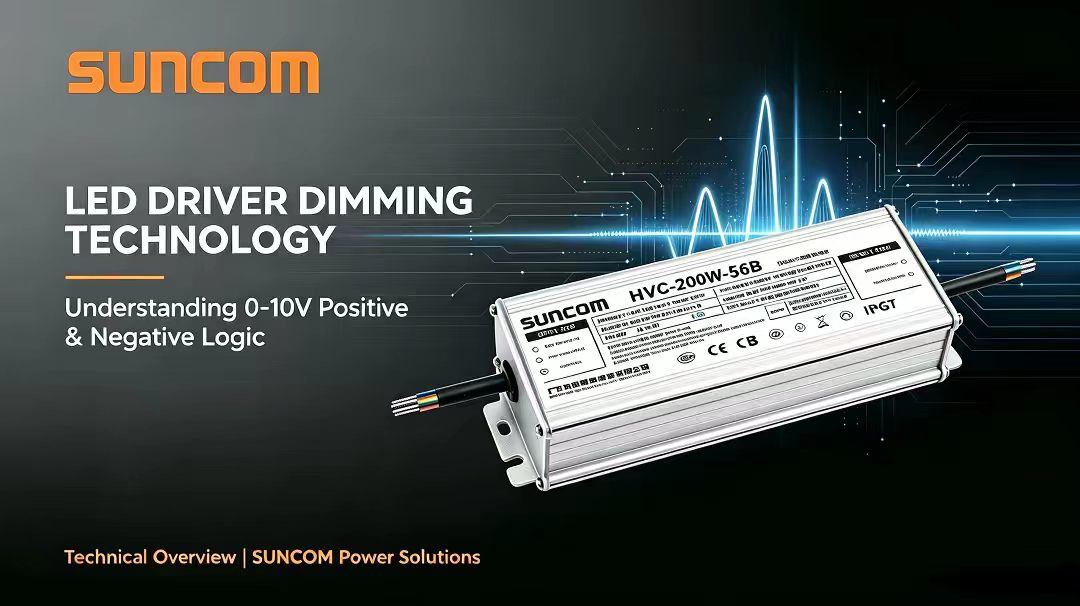
This article explains the core principles of both dimming logics, their hardware implementations, and key practical considerations for field deployment.
Understanding Positive and Negative Logic Dimming in LED Driver

Understanding LED Constant Current LED driver for Outdoor Lighting
LED Constant Current Drivers: The Core Heart of Outdoor Luminaires