How to Choose the Right LED Street Light Power Supply
2023-11-06
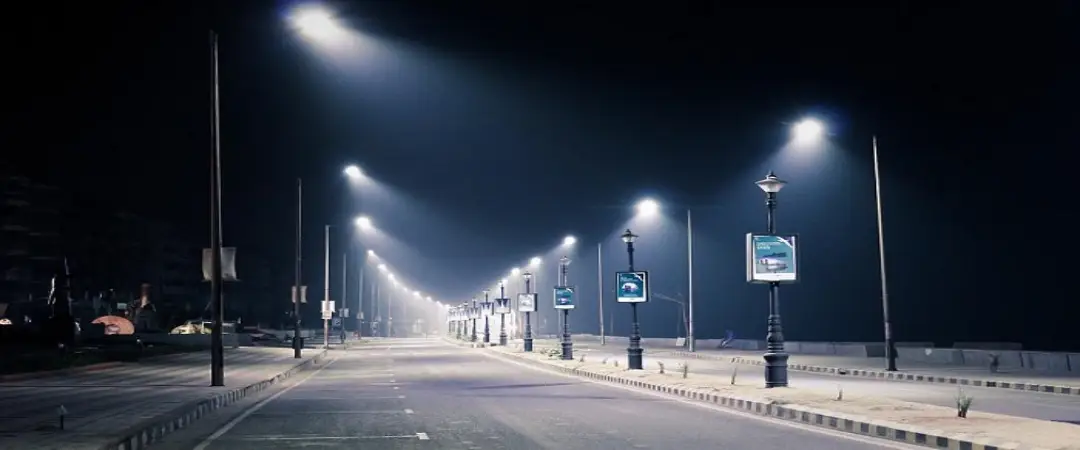
With the development of the led lighting industry, the development of commercial led street lights is also getting faster and faster, and the advantages offered by led as an outdoor lighting source are becoming increasingly apparent. How to choose the right LED street light power supply, you need to take a variety of factors into consideration. The development of led outdoor lighting has been made more and more attractive by the good power saving rate and lighting comfort.
What Are LED Street Lights?
LED street lights, or Light-Emitting Diode street lights, are energy-efficient outdoor lighting fixtures designed for illuminating streets, roads, highways, and public areas. These modern lighting solutions have gained popularity due to their numerous advantages over traditional lighting technologies like high-pressure sodium (HPS) or metal halide lamps.
What Are LED Street Lights?
LED street lights, or Light-Emitting Diode street lights, are energy-efficient outdoor lighting fixtures designed for illuminating streets, roads, highways, and public areas. These modern lighting solutions have gained popularity due to their numerous advantages over traditional lighting technologies like high-pressure sodium (HPS) or metal halide lamps.
Application of LED Street Light
LED Street Lights can be used for many different applications.
Primary roads, secondary roads, and highways need extra light for safety. For these roads, the lighting class requirement is normally from M1 to M6.
Pedestrian streets, cycleways, emergency lanes, other road areas lying along the carriageway, and residential roads. For these applications, the P lighting class(P1 to P6) is normally required.
Other exterior lighting, like the schoolyard, parking area, urban square, and outside of the factory.
Pedestrian streets, cycleways, emergency lanes, other road areas lying along the carriageway, and residential roads. For these applications, the P lighting class(P1 to P6) is normally required.
Other exterior lighting, like the schoolyard, parking area, urban square, and outside of the factory.
Difference Between LED and Traditional Street Light
The difference between LED (Light-Emitting Diode) street lights and traditional street lights (such as high-pressure sodium or metal halide lamps) lies in several key aspects:
Energy Efficiency:
- LED Street Lights: LEDs are highly energy-efficient and convert a significant portion of electrical energy into visible light. They consume less power and result in substantial energy savings.
- Traditional Street Lights: Traditional lights like high-pressure sodium lamps are less energy-efficient, with a significant portion of energy being wasted as heat.
Lifespan:
- LED Street Lights: LED street lights have a much longer lifespan, often lasting up to 25,000 to 100,000 hours. This results in reduced maintenance and replacement costs.
- Traditional Street Lights: Traditional lights have a shorter lifespan, typically ranging from 10,000 to 20,000 hours, necessitating more frequent replacements.
Instant Illumination:
- LED Street Lights: LEDs provide instant and full illumination when switched on, without a warm-up period.
- Traditional Street Lights: Some traditional lighting technologies may require a warm-up period before reaching full brightness.
Directional Lighting:
- LED Street Lights: LEDs emit light in a specific direction, allowing for efficient light distribution with minimal light pollution. Light is directed where it's needed.
- Traditional Street Lights: Traditional lights emit light in all directions, leading to greater light scattering and potential light pollution.
Color Temperature and Color Rendering:
- LED Street Lights: LED lighting allows for a range of color temperatures and good color rendering. Different color temperatures can be selected to suit specific applications.
- Traditional Street Lights: Traditional lights have limited options for color temperature and may not provide accurate color rendering.
Environmental Impact:
- LED Street Lights: LED lights have a lower environmental impact due to reduced energy consumption and longer lifespans. They contain no hazardous materials like mercury.
- Traditional Street Lights: Traditional lights may contain hazardous substances, such as mercury in fluorescent lamps, which can pose disposal challenges and environmental risks.
Dimming and Control:
- LED Street Lights: LEDs are readily dimmable and compatible with control systems, allowing for adaptive lighting solutions that can further enhance energy savings.
- Traditional Street Lights: Some traditional lights can be dimmed, but the technology is often less flexible and efficient.
Maintenance and Reliability:
- LED Street Lights: LED street lights require less maintenance due to their longer lifespan, reducing operational costs.
- Traditional Street Lights: Traditional lights may require more frequent maintenance and replacement, increasing maintenance expenses.
Important Parameters of LED Street Light
The important parameters of LED street lights include:
- Wattage: Wattage indicates the power consumption of the LED street light. It affects the brightness, with higher wattage lights being brighter but consuming more energy.
- LED Driver: The LED driver is responsible for managing the current and voltage to power the LED. A high-quality LED driver ensures stable brightness and extends the LED's lifespan.
- LED Chips: LED chips are the light-emitting components of the LED. Different LED chips offer varying levels of brightness and efficiency. Choosing high-quality LED chips results in brighter and longer-lasting illumination.
- Lens/Optics: Lenses or optical components control the distribution and direction of the LED beam. Proper lens/optics design ensures that the light reaches the desired area and reduces light pollution.
- Color Temperature (CCT - Correlated Color Temperature): CCT describes the color of the LED light. Lower CCT values (around 2700-3000K) produce warm white light, while higher CCT values (around 4000-5000K) produce cool white or daylight-like light.
- Color Rendering Index (CRI): CRI measures how accurately the LED light renders colors compared to natural light. A higher CRI indicates better color accuracy.
4 Factors for Choosing the Best LED Driver for LED Street Lights
1.High-quality components
LED drivers must meet high quality requirements due to severe weather conditions such as high temperatures, high humidity, and lightning strikes. In addition to good design, the reliability of the LED driver's power components will also have an impact on the quality of the LED driver. Street lamps require a lot of maintenance and are costly. Therefore, driving power components need to be durable and anti-interference as well as environmentally adaptable so they can operate normally at temperatures between -30°C and 60°C for a long period of time.
2.High efficiency and energy saving
Due to the energy efficiency of a high-efficiency led street light, the driver of the led street light is also highly efficient. In addition to decreasing luminous efficiency with increasitemperatures, the heateat dissipation of led lights is also crucial. In addition to the high efficiency of the power supply, the low power loss and low heat generated by the lamp help delay the light decay of the led light, resulting in a lower temperature rise of the lamp.
3.Waterproof performance
3.Waterproof performance
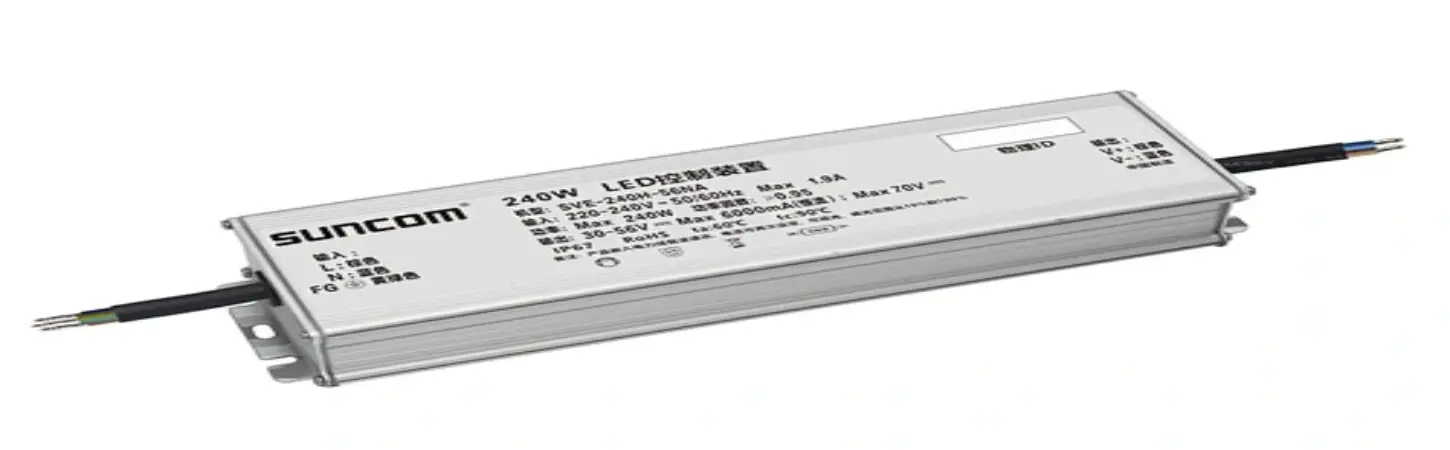
The outdoor environment of street lights requires LED drivers to be waterproof, so they must perform well. In order to meet different needs, led drivers can be designed according to IP65, IP67, IP68, and other levels of waterproofness and dustproof, and street lamp drive power is usually IP67 waterproof, as shown in figure 150W IP67 waterproof led driver.

4.Surge protection
Outdoors, street lamps are exposed to complex and changing environments. As the grid load begins to load and lightning strikes start, surges from the grid system will cause damage to the lamp. Consequently, the LED driver power supply should have the ability to suppress the intrusion of surges and protect the lamp from being damaged. The LED driver for street lights is generally protected from surges of over 4KV.
Do you know how to select an LED driver for street lights? For further insights on LED street light drivers, feel free to get in touch with the manufacturer, Gdsuncom.
Do you know how to select an LED driver for street lights? For further insights on LED street light drivers, feel free to get in touch with the manufacturer, Gdsuncom.
A Comprehensive Guide to 1-10V Dimming
Demystifying Programmable LED Drivers: What Are They and How Do They Work?
Related Article
This article explains the core principles of both dimming logics, their hardware implementations, and key practical considerations for field deployment.
Understanding Positive and Negative Logic Dimming in LED Driver
Understanding LED Constant Current LED driver for Outdoor Lighting
LED Constant Current Drivers: The Core Heart of Outdoor Luminaires