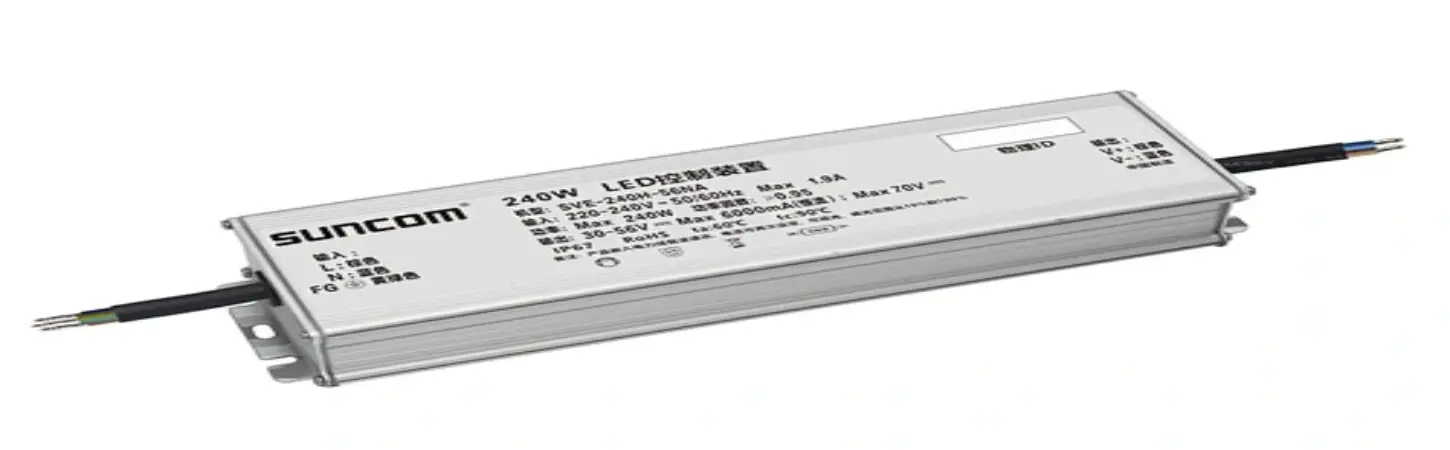
How Do I Choose the Right LED Driver?
2023-12-05
When it comes to choosing the right LED driver, compatibility is extremely important. The wrong driver could result in not only failures but could also damage the components that are used in the LED system. In this guide, we'll delve into the key considerations to help you make an informed decision when choosing an LED driver.
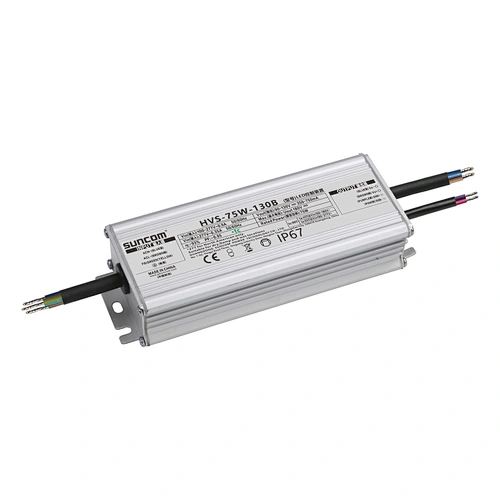
What Is a LED Driver?
The LED driver is a device that regulates and supplies the power required to 'drive' LED strips of light. They are similar to traditional transformers in that they convert alternating current (240v AC) from the mains voltage to a lower voltage. However, LED drivers also convert that mains current into a constant, direct current (DC) that LEDs require as part of their operation. In order to control the power supplied to LEDs, drivers must adjust their output in accordance with the electrical properties of the LED tape which change as it heats up, so that a constant voltage of DC is supplied to the LEDs at a constant level of usually 12v or 24v.
Given that LEDs necessitate a steady DC power supply of either 12v or 24v, the inclusion of LED drivers becomes imperative in nearly all LED systems. This, of course, excludes systems explicitly designed to be operated by mains voltage power sources, such as mains voltage tape or certain types of LED bulbs.
Given that LEDs necessitate a steady DC power supply of either 12v or 24v, the inclusion of LED drivers becomes imperative in nearly all LED systems. This, of course, excludes systems explicitly designed to be operated by mains voltage power sources, such as mains voltage tape or certain types of LED bulbs.
What Is Voltage?
There are two voltages that LED strip lights require to operate, which can be found on the product specifications. Be sure to purchase a driver that has the same output voltage as the tape. If you use 12V tape with a 24V driver, the LEDs will become brighter in the short term, resulting in the tape burning out because of the high voltage. On the other hand, if you use 24V tape with a 12V driver, the LEDs will not be lit up in any way.
What Is Wattage?
The power consumption of LED tape is contingent on its length. The wattage of the tape denotes the power consumed per meter. To determine the total power requirement for your specific length of tape, multiply the tape's wattage by the number of meters in your run. For instance, a 5-meter segment of 6W LED tape requires a total of 30 watts. It is advisable to employ a driver with an output capacity of 33 watts or more to effectively power this tape.
Once you ascertain the wattage needed for your LED tape, you can then select an appropriate driver. The wattage of a driver indicates its maximum output capacity. It is recommended to opt for a driver with a wattage capability at least 10% higher than the wattage required by the LED tape. This ensures not only optimal performance but also extends the lifespan of both the tape and the driver.
Once you ascertain the wattage needed for your LED tape, you can then select an appropriate driver. The wattage of a driver indicates its maximum output capacity. It is recommended to opt for a driver with a wattage capability at least 10% higher than the wattage required by the LED tape. This ensures not only optimal performance but also extends the lifespan of both the tape and the driver.
Does Your Driver Need to Be Waterproof?
For LED strips to work properly, it is imperative that you use a driver that is waterproof when installing them outdoors or in environments with moisture. You can determine if a driver is water resistant by looking at its Ingress Protection, or “IP” rating. It has been found that splash-proof drivers with an IP rating of 65 are best suited for use in bathrooms and kitchens (protecting against low pressure water from any direction). A waterproof driver must have an IP rating of 67 (Protection from immersion between 15cm and 1m in depth) or higher in order to be used outdoors.
Are You Interested in Dimming Your LEDs?
If you desire the ability to dim your LEDs, ensure the purchase of a driver equipped with dimming capabilities. These drivers function by regulating the supplied power to the LEDs, and there are two distinct types available: trailing edge dimmable drivers, also recognized as ELV drivers, and leading edge dimmable drivers, alternatively known as TRIAC drivers.
How to Choose an LED Driver?
1.Know the Type and Number of LED Lights in the Setup
Identify the type and number of LED lights you will need, as well as how they will be arranged.
A constant-current LED driver is required if your lights are wired in series, like ground and decking lights, or a constant-voltage driver if they are wired in parallel, like LED tape.
2.Check the Output Voltage of the LED Driver
Ensure that the LED light's input voltage and the LED driver's output voltage are compatible before connecting them.
Some types of LED lights may be compatible with constant-current LED drivers at 6 volts to 24 volts. However, their compatibility may not be universal.
3.Check the Milliamp Rating of Your LEDs
It is important to make sure that the LED light's milliamp rating is the same as that of the LED driver's. Milliamps and amps are both units of measurement for electrical current. LED lights come in a variety of milliamp ratings, but the most common are 350mA and 700mA.
4.Check the Wattage of the LED Driver
You should make sure that the wattage rating of the LED driver is greater than or equal to the total wattage of all the lights you intend to connect to it. For instance, for a driver equipped with five 3-watt outdoor strip lights, the wattage rating should be at least 15 watts.
As an example, if you are using an LED tape that has a wattage rating of 15 watts per meter, but the total length of the tape is 3 meters, your LED driver should have at least 45 watts if the tape is powered at 15 watts per meter.
Identify the type and number of LED lights you will need, as well as how they will be arranged.
A constant-current LED driver is required if your lights are wired in series, like ground and decking lights, or a constant-voltage driver if they are wired in parallel, like LED tape.
2.Check the Output Voltage of the LED Driver
Ensure that the LED light's input voltage and the LED driver's output voltage are compatible before connecting them.
Some types of LED lights may be compatible with constant-current LED drivers at 6 volts to 24 volts. However, their compatibility may not be universal.
3.Check the Milliamp Rating of Your LEDs
It is important to make sure that the LED light's milliamp rating is the same as that of the LED driver's. Milliamps and amps are both units of measurement for electrical current. LED lights come in a variety of milliamp ratings, but the most common are 350mA and 700mA.
4.Check the Wattage of the LED Driver
You should make sure that the wattage rating of the LED driver is greater than or equal to the total wattage of all the lights you intend to connect to it. For instance, for a driver equipped with five 3-watt outdoor strip lights, the wattage rating should be at least 15 watts.
As an example, if you are using an LED tape that has a wattage rating of 15 watts per meter, but the total length of the tape is 3 meters, your LED driver should have at least 45 watts if the tape is powered at 15 watts per meter.
Buy the Correct LED Driver for Your LED Lights
For LED drivers that suit different types of LED lights, check out Gdsuncom' online shop. We have dimmable models for a variety of lighting projects.
For further questions about our LED drivers, you may also contact us.
For further questions about our LED drivers, you may also contact us.
Leading LED Driver Manufacturer-Suncom
Established in 2009, Guangdong Suncom Power stands as a cutting-edge LED driver enterprise. Guided by the brand strategy of "committed to being a top LED driver manufacturer" and a development strategy emphasizing cost efficiency, Suncom has positioned itself at the forefront of the industry.
Spanning over 30,000 square meters, our state-of-the-art industrial park accommodates more than 300 employees and boasts two modern standard workshops along with nine semi-automatic production lines. With a monthly average capacity exceeding 1,000,000 units at full load, Suncom is dedicated to meeting the growing demands of the market. We take pride in our adherence to stringent quality standards, having obtained ISO certifications for our quality management system, environmental management system, and occupational health and safety management system.
Our commitment to excellence is further evidenced by the numerous product certifications we have acquired, including UL, FCC, ETL, CLASS-P, ENEC, TUV, CE, CB, and CCC, ensuring that our products meet the highest industry standards. In 2022, Suncom made substantial investments in establishing a CNAS standard laboratory and a dedicated Research and Development center, staffed by a team of over 60 professionals. This strategic move underscores our dedication to innovation and continuous improvement.
Suncom's LED driver products find widespread applications in industrial lighting, street lighting, plant lighting, smart lighting, and beyond. As we continue to evolve and expand our capabilities, our focus remains on delivering reliable, efficient, and cutting-edge solutions to illuminate various sectors of the lighting industry.
Spanning over 30,000 square meters, our state-of-the-art industrial park accommodates more than 300 employees and boasts two modern standard workshops along with nine semi-automatic production lines. With a monthly average capacity exceeding 1,000,000 units at full load, Suncom is dedicated to meeting the growing demands of the market. We take pride in our adherence to stringent quality standards, having obtained ISO certifications for our quality management system, environmental management system, and occupational health and safety management system.
Our commitment to excellence is further evidenced by the numerous product certifications we have acquired, including UL, FCC, ETL, CLASS-P, ENEC, TUV, CE, CB, and CCC, ensuring that our products meet the highest industry standards. In 2022, Suncom made substantial investments in establishing a CNAS standard laboratory and a dedicated Research and Development center, staffed by a team of over 60 professionals. This strategic move underscores our dedication to innovation and continuous improvement.
Suncom's LED driver products find widespread applications in industrial lighting, street lighting, plant lighting, smart lighting, and beyond. As we continue to evolve and expand our capabilities, our focus remains on delivering reliable, efficient, and cutting-edge solutions to illuminate various sectors of the lighting industry.
LED Drivers: What You Need to Know
A Comprehensive Guide to Selecting the Right LED Driver for Your Lighting Needs
Related Article
This article explains the core principles of both dimming logics, their hardware implementations, and key practical considerations for field deployment.
Understanding Positive and Negative Logic Dimming in LED Driver
Understanding LED Constant Current LED driver for Outdoor Lighting
LED Constant Current Drivers: The Core Heart of Outdoor Luminaires