A Comprehensive Guide to Selecting the Right LED Driver for Your Lighting Needs
2023-11-20
Choosing the correct LED driver for your outdoor LED strip lights is vital when picking the right LED driver. In an LED system, using the wrong driver could lead to failures and damage to the components that are being used.
What Is an LED Driver?
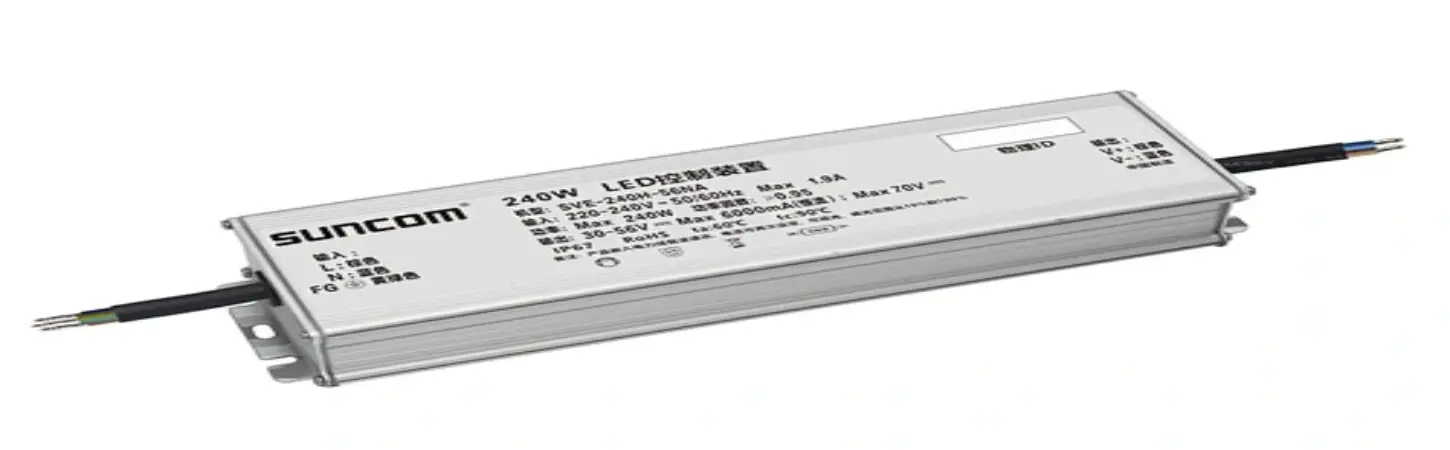
An LED driver is a crucial component in LED lighting systems, responsible for regulating the power supply to the LED light source. Unlike traditional light sources that can operate directly from the mains, LEDs require a specific and stable current to function optimally. The LED driver converts the incoming electrical power to the appropriate voltage and current needed by the LED, ensuring efficient and reliable operation.
In essence, an LED driver serves as a power management device, controlling the electrical characteristics to match the requirements of the connected LED. This includes maintaining a consistent current, voltage, and sometimes even adjusting the frequency to meet the specifications of the LED lighting system.
In essence, an LED driver serves as a power management device, controlling the electrical characteristics to match the requirements of the connected LED. This includes maintaining a consistent current, voltage, and sometimes even adjusting the frequency to meet the specifications of the LED lighting system.
Types of LED Drivers
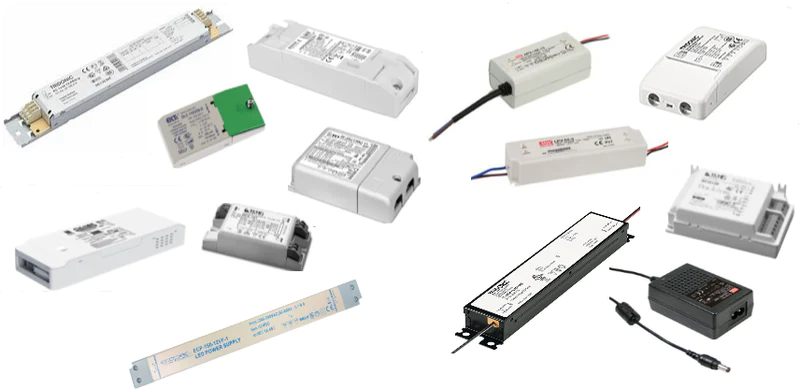
LED drivers are mainly classified into two types:
- LED drivers that utilize a low-voltage DC input power, between 5 volts and 36 volts.
- Offline drivers or LED drivers that use high-voltage AC input power, between 90 volts and 277 volts.
Large-scale general lighting projects, whether commercial or residential, may benefit from these high-input AC-powered drivers, also known as off-line drivers. For smaller applications, low-voltage DC-powered drivers are recommended. They are reliable and efficient and provide more output options and dimming options.
What to Consider When Choosing an LED Driver?
1.Type and Number
Determine the quantity and type of LED lights required for your installation, along with the desired arrangement.
Determine the quantity and type of LED lights required for your installation, along with the desired arrangement.
Opt for a constant-current LED driver when connecting lights in series, such as ground and decking lights. Alternatively, choose a constant-voltage LED driver for parallel wiring configurations, such as with LED tape or commercial LED strip lights.
2.Wattage Rating
Verify that the LED driver's wattage rating exceeds or equals the total wattage of all connected lights. For example, if you have a driver powering five 3-watt outdoor strip lights, ensure the driver has a minimum wattage rating of 15 watts.
When working with LED tape, calculate the required wattage by multiplying the length of the tape by the wattage rating per meter. For instance, if the tape operates at 15 watts per meter and the total length is 3 meters, your LED driver should have a minimum rating of 45 watts.
3.Milliamp Rating
It's crucial to match the milliamp rating of your LED lights with that of your LED driver.
It's crucial to match the milliamp rating of your LED lights with that of your LED driver.
Electrical current is typically measured in amps and milliamps. Among various milliamp ratings for LED lights, the most prevalent ones are 350mA and 700mA.
4.Output Voltage
Verify the compatibility of the input voltage for your LED light and the output voltage of the LED driver before connecting them to prevent damage.
Verify the compatibility of the input voltage for your LED light and the output voltage of the LED driver before connecting them to prevent damage.
Some constant-current LED drivers operate within a voltage range of 6 volts to 24 volts, catering to specific types of LED lights. However, it's essential to note that their compatibility is not universal.
What Function Do You Need?
Choosing an LED driver depends on what kind of function your LED light needs before you select it. We here listed several functions for LED street lights that are frequently requested by our customers, such as timing dimming, OLC, NTC, 0-10V, Dali, D4i, and auxiliary power supply.
Timing dimming
This function enables dimming capabilities for LED street lights during the night, optimizing energy usage and promoting eco-friendliness. Typically, the lights operate at minimal brightness levels between 0:00 and 4:00, corresponding to lower traffic periods, resulting in energy savings. The virtual midnight timing dimming further reduces the LED light output from 24:00 onward.
When utilizing an LED driver with a preset program, such as a configuration where the LED operates at 100% brightness for the initial 6 hours, reduces to 50% for the subsequent 6 hours, and returns to 100% for the final 2 hours, a specific dimming curve is established.
For instance, if the light is activated at 18:00 and deactivated at 6:00, it functions at 100% brightness from 18:00 to 24:00, switches to 50% brightness from 24:00 to 4:00, and resumes 100% operation from 4:00 to 6:00.
This dimming strategy can yield energy savings ranging from 30% to 50%. For a more in-depth exploration of this technology, additional insights can be found in resources detailing street light control systems.
When utilizing an LED driver with a preset program, such as a configuration where the LED operates at 100% brightness for the initial 6 hours, reduces to 50% for the subsequent 6 hours, and returns to 100% for the final 2 hours, a specific dimming curve is established.
For instance, if the light is activated at 18:00 and deactivated at 6:00, it functions at 100% brightness from 18:00 to 24:00, switches to 50% brightness from 24:00 to 4:00, and resumes 100% operation from 4:00 to 6:00.
This dimming strategy can yield energy savings ranging from 30% to 50%. For a more in-depth exploration of this technology, additional insights can be found in resources detailing street light control systems.
Output Lumen Compensation (OLC)
Lumen Output Compensation (LOC) is employed to ensure a consistent light output throughout the LED's lifespan. This is achieved by initially driving the LEDs at a reduced current when they are new and gradually increasing the drive current over time to counteract the natural degradation of LED lumens.
Thermistor (NTC)
A thermistor (NTC), a specialized resistor highly responsive to temperature changes, serves as a temperature sensor due to its temperature-dependent resistance, more pronounced than that of standard resistors. When integrated into an LED light, the NTC detects the temperature of the PCB board. In the event of overheating, the LED driver can adjust the output, reducing the brightness of the LED light. This intentional dimming minimizes the temperature of the LED chips, safeguarding them from potential damage.
0-10V dimming, Dali
0-10V dimming and Dali are common dimming methods, so we won’t go into details here.
D4i
D4i represents an extension of DALI-2, signifying that D4i products are essentially DALI-2 products enhanced with specific features, notably including Zhaga sockets. The D4i certification is applicable to DALI-2 products that fulfill the auxiliary power, diagnostics, and electricity metering functions required by DALI for lighting devices. It's important to note that all D4i certified products inherently possess DALI-2 certification. These products have the option to display the D4i logo, the DALI-2 logo, or both. However, it's worth mentioning that the converse is not necessarily true: DALI-2 certified products may not necessarily carry D4i certification.
Auxiliary power supply
The LED circuit is powered by all LED drivers, but an auxiliary power supply is a second output that can be used to support other devices requiring power. Auxiliary power can be used to power microwaves, cameras, Zhaga sockets, etc. Therefore, if you need to install LED fixtures on these devices, you should consider using an LED power supply with an auxiliary power supply.
IP rating of LED driver
An IP (ingress protection) rating indicates the degree of protection a mechanical or electrical enclosure has against intrusion, dust, accidental contact, and water.
Water and electricity are extremely dangerous when they are combined, everyone knows that. Generally, LED lamps are required to have an IP rating for their power supply, especially outdoor lamps, since the LED driver is directly connected to electricity. In indoor lighting, an IP20 rating is generally sufficient. Power supplies for outdoor lamps should have an IP65, IP66, or IP67 rating. An IP20 LED driver is also acceptable if your power supply cavity is waterproof. However, the entire lamp must have an IP65 rating, otherwise, the lamp cannot be used outdoors.
Water and electricity are extremely dangerous when they are combined, everyone knows that. Generally, LED lamps are required to have an IP rating for their power supply, especially outdoor lamps, since the LED driver is directly connected to electricity. In indoor lighting, an IP20 rating is generally sufficient. Power supplies for outdoor lamps should have an IP65, IP66, or IP67 rating. An IP20 LED driver is also acceptable if your power supply cavity is waterproof. However, the entire lamp must have an IP65 rating, otherwise, the lamp cannot be used outdoors.
Important Factors When Buying an LED Driver
There are so many variations of LED drivers that it can be somewhat confusing to choose the right one for a novice. We've already covered some of the most important buying considerations, but here we'll cover a few more. We may feel that some of this is redundant, but it is essential to repeat it to ensure understanding.
1.Output Voltage
Always consider the voltage required by your light(s). If your lights require 12 volts, use a 12-volt driver. Always ensure your LED driver will produce power within the specified range of your lights when using a constant-current LED driver. Constant-current drivers must take into account both the current range and the voltage range. Constant-voltage drivers require only the voltage range.
2.Input Voltage
You should ensure that the voltage you are using is compatible with the LED driver you are using even though most LED drivers can accept a range of input voltages. Most household voltages are 120 volts, while most commercial and industrial voltages are 277 volts. If you're uncertain, talk to an electrician. When working with LEDs that are constant-current, consider their input current as well.
3.Dimming
Both constant-current and constant-voltage LED drivers can incorporate dimming capabilities. However, it is crucial to confirm the presence of dimming specifications in the dimmer's documentation. Without explicit mention of dimming features in the dimmer's specifications, it is prudent to assume that the system is not equipped for dimming.
4.Wattage
Make sure your driver has a maximum wattage capability greater than your light or lights' total wattage. Don't use a driver with a light or lights that use less than 50% of its maximum wattage.
1.Output Voltage
Always consider the voltage required by your light(s). If your lights require 12 volts, use a 12-volt driver. Always ensure your LED driver will produce power within the specified range of your lights when using a constant-current LED driver. Constant-current drivers must take into account both the current range and the voltage range. Constant-voltage drivers require only the voltage range.
2.Input Voltage
You should ensure that the voltage you are using is compatible with the LED driver you are using even though most LED drivers can accept a range of input voltages. Most household voltages are 120 volts, while most commercial and industrial voltages are 277 volts. If you're uncertain, talk to an electrician. When working with LEDs that are constant-current, consider their input current as well.
3.Dimming
Both constant-current and constant-voltage LED drivers can incorporate dimming capabilities. However, it is crucial to confirm the presence of dimming specifications in the dimmer's documentation. Without explicit mention of dimming features in the dimmer's specifications, it is prudent to assume that the system is not equipped for dimming.
4.Wattage
Make sure your driver has a maximum wattage capability greater than your light or lights' total wattage. Don't use a driver with a light or lights that use less than 50% of its maximum wattage.
Choose the Right LED Driver for Your LED Lights
Purchase the right led driver for your led lights at the gdsuncom online store. Explore our selection of led drivers tailored to various types of led lights, including dimmable models for diverse lighting projects.
If you have any additional inquiries regarding our led drivers, feel free to reach out to our team of led experts at +86 760 28168132. Contact gdsuncom today for all your led driver needs!
If you have any additional inquiries regarding our led drivers, feel free to reach out to our team of led experts at +86 760 28168132. Contact gdsuncom today for all your led driver needs!
How Do I Choose the Right LED Driver?
How to Install an LED Driver
Related Article
This article explains the core principles of both dimming logics, their hardware implementations, and key practical considerations for field deployment.
Understanding Positive and Negative Logic Dimming in LED Driver
Understanding LED Constant Current LED driver for Outdoor Lighting
LED Constant Current Drivers: The Core Heart of Outdoor Luminaires