A Comprehensive Guide to 1-10V Dimming
2023-11-08
Within the realm of lighting control, 1-10V dimming has emerged as a highly regarded choice for its adaptability and energy-efficient characteristics. It functions by regulating the current that flows through LED lights, affording precise control over their brightness. This technology finds extensive utility in diverse applications, encompassing home illumination, stage lighting, and commercial lighting solutions.
What Is 1-10V Dimming?
1-10V dimming is a lighting control method that enables users to adjust the brightness of compatible light fixtures within a range from 1 to 10 volts. It is a widely used and versatile dimming system, particularly in the realm of LED lighting. The "1-10V" designation specifies the control voltage range, where 1V typically corresponds to the lowest brightness level, and 10V signifies the highest brightness level.
How Does 1-10V Dimming Work?
Here's how 1-10V dimming works:
- Control Voltage Generation: A control device, such as a dimmer switch or a lighting control system, produces a control voltage signal within the 1-10V range. This voltage signal is sent to the dimmable ballast or LED driver, which interprets it to adjust the light output.
- Brightness Adjustment: The dimmable ballast or driver translates the received voltage signal into a corresponding light output. For instance, a 5V signal typically results in the light fixture operating at 50% brightness. The voltage signal's level directly correlates with the desired illumination level.
- Linear Dimming: One notable characteristic of 1-10V dimming is its linearity. This means that the light output changes proportionally to the voltage signal. A 2V signal results in approximately 20% brightness, and an 8V signal leads to about 80% brightness.
Benefits of 1-10V Dimming
- Versatility: 1-10V dimming is compatible with a wide range of lighting fixtures, including fluorescent and LED lighting. It offers users the flexibility to customize illumination levels according to their preferences.
- Energy Efficiency: By reducing light output, 1-10V dimming conserves energy. This makes it an eco-friendly solution, contributing to reduced energy consumption and lower utility bills.
- Extended Lamp Life: Dimming lights can extend the lifespan of lamps and luminaires. By operating at less than full power, the wear and tear on light sources are reduced.
- Enhanced Ambiance: 1-10V dimming allows for the creation of dynamic and adaptable lighting schemes. It's ideal for creating different moods in spaces, from bright and vibrant to cozy and intimate.
- Daylight Harvesting: In environments with natural light sources, 1-10V dimming can be integrated with daylight harvesting systems. It ensures that artificial lighting adjusts in response to available natural light, maximizing energy savings.
Applications of 1-10V Dimming
- Commercial Spaces: 1-10V dimming is frequently used in commercial settings, such as offices, retail stores, and conference rooms. It provides precise control over lighting to create comfortable and productive environments.
- Industrial Facilities: Manufacturing facilities and warehouses benefit from 1-10V dimming to reduce energy costs and provide adequate lighting for various tasks.
- Educational Institutions: Schools and universities employ 1-10V dimming to enhance the learning environment. It enables educators to adjust lighting levels to suit different activities.
- Healthcare Facilities: Hospitals and healthcare facilities use 1-10V dimming for patient rooms and treatment areas to create a calming and healing atmosphere.
- Residential Settings: In homes, 1-10V dimming is used for ambient, task, and accent lighting, offering homeowners control over the lighting mood and energy consumption.
Installation of 1-10V Dimming
Step 1: Gather Equipment
- 1-10V dimmable ballast or LED driver
- 1-10V dimmer switch or control system
- Electrical wiring and connectors
- Screwdriver and wire strippers
Step 2: Turn Off Power
Before beginning the installation, turn off the power supply to the lighting circuit at the circuit breaker to ensure safety.
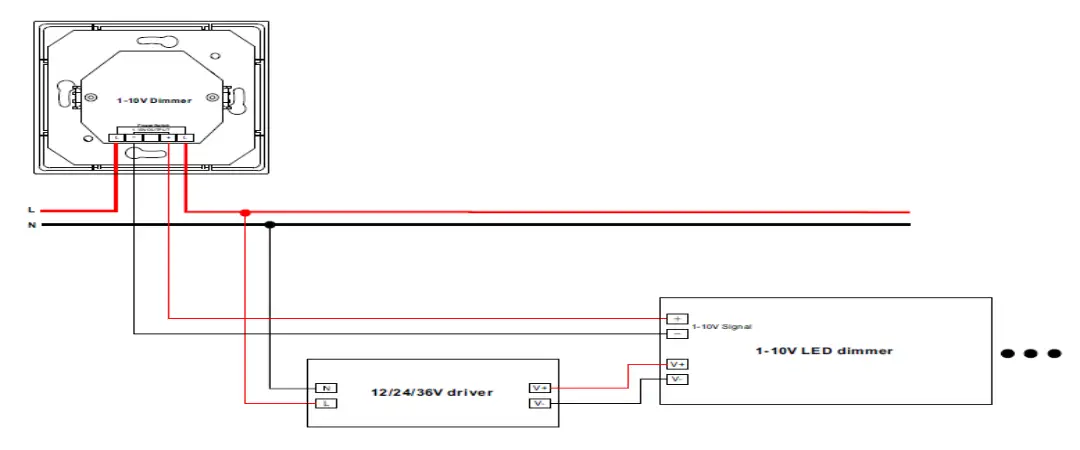
Step 3: Connect Wiring
- Wire the 1-10V dimmable ballast or driver to the lighting fixture.
- Connect the dimmer switch or control system to the ballast or driver.
Step 4: Test and Adjust
- Restore power and test the dimming function to ensure it operates correctly.
- Adjust the dimmer or control system to achieve the desired lighting levels.
Step 5: Secure and Finish
Once satisfied with the settings, secure all wiring and components in place.
Close the electrical junction box and turn the power back on.
Once satisfied with the settings, secure all wiring and components in place.
Close the electrical junction box and turn the power back on.
What Is the Difference Between 0-10 and 1-10V Dimming?
0-10V and 1-10V dimming are two commonly used lighting control methods that are similar in many aspects but differ in terms of their voltage signal range. The main difference lies in the minimum voltage level at which the dimming signal starts. Here's a breakdown of the key distinctions between 0-10V and 1-10V dimming:
0-10V Dimming:
0-10V Dimming:
- Voltage Range: In a 0-10V dimming system, the control voltage signal ranges from 0 to 10 volts. This means the signal starts at zero volts, indicating that the minimum brightness level is achieved when no voltage is applied. As the voltage increases from zero to 10V, the light output progressively brightens, with 10V typically corresponding to full brightness.
- Minimum Brightness: The key characteristic of 0-10V dimming is that it can reduce the light output to complete darkness, as the signal starts from zero volts. This makes it suitable for applications where a complete blackout is required.
- Applications: 0-10V dimming is often used in applications where full-range dimming, from complete darkness to full brightness, is necessary. This includes settings such as theaters, cinemas, and some commercial spaces where complete light control is essential.
1-10V Dimming:
- Voltage Range: In a 1-10V dimming system, the control voltage signal ranges from 1 to 10 volts. This means that the dimming signal starts at 1V, signifying the minimum brightness level. As the voltage increases from 1V to 10V, the light output progressively brightens, with 10V typically corresponding to full brightness.
- Minimum Brightness: 1-10V dimming cannot achieve complete darkness because the signal starts at 1V. It is not suitable for applications where full blackout is required.
- Applications: 1-10V dimming is widely used in a broad range of applications, including residential lighting, commercial lighting, and industrial lighting. It is a versatile and energy-efficient dimming method that offers precise control over lighting levels.
Conclusion
1-10V dimming is a versatile and energy-efficient lighting control method with numerous benefits and applications. Understanding how it works and how to install it empowers users to create dynamic lighting environments while conserving energy and extending the life of lighting fixtures. Whether in commercial spaces, homes, or industrial settings, 1-10V dimming plays a crucial role in modern lighting control solutions.
Led Dimming Specialist
Since 2009, Guangdong Suncom has established itself as a leading authority in the realm of LED lighting and innovative lighting design. With an in-house product design team, we ensure that our products are at the forefront of technological advancements. Notably, our products come with an impressive warranty, extending up to 5 years, providing you with peace of mind. Additionally, we offer comprehensive lighting maintenance services. Explore our extensive range of Suncom LED drivers, including 1-10V dimmable products, to discover the perfect lighting solution you've been seeking.
More 1-10V dimmable products


How to Install an LED Driver
How to Choose the Right LED Street Light Power Supply
Related Article
This article explains the core principles of both dimming logics, their hardware implementations, and key practical considerations for field deployment.
Understanding Positive and Negative Logic Dimming in LED Driver
Understanding LED Constant Current LED driver for Outdoor Lighting
LED Constant Current Drivers: The Core Heart of Outdoor Luminaires