A Complete Guide to LED IP Ratings
2024-01-23
What does IP stand for?
IP is an acronym "Ingress Protection". In manufacturing and electronics, IP can refer to the Ingress Protection rating, which classifies and rates the degree of protection provided against the intrusion of solid objects, dust, accidental contact, and water in electrical enclosures.
Typically, IP ratings are denoted by two numbers. The first number refers to the protection given to the device against solid objects and the second letter refers to the protection provided against liquids.
Typically, IP ratings are denoted by two numbers. The first number refers to the protection given to the device against solid objects and the second letter refers to the protection provided against liquids.
What Is an IP Rating?
An IP rating, or Ingress Protection rating, is a standard that defines the level of protection provided by an electrical enclosure or electronic device against the intrusion of solid objects like dust and liquids. The IP rating system is recognized internationally and is typically expressed as "IP" followed by two digits.
The first digit in the IP rating refers to protection against solid objects, while the second digit relates to protection against liquids. Each digit has a specific meaning:
The first digit in the IP rating refers to protection against solid objects, while the second digit relates to protection against liquids. Each digit has a specific meaning:
First Digit (Protection against solids)
- 0: No protection
- 1: Protection against objects larger than 50mm (e.g., hands)
- 2: Protection against objects larger than 12.5mm (e.g., fingers)
- 3: Protection against objects larger than 2.5mm (e.g., tools and wires)
- 4: Protection against objects larger than 1mm (e.g., small tools and wires)
- 5: Dust-protected (limited ingress; no harmful deposit)
- 6: Dust-tight (complete protection against dust)
Second Digit (Protection against liquids)
- 0: No protection
- 1: Protection against vertically falling drops of water
- 2: Protection against direct sprays of water up to 15 degrees from vertical
- 3: Protection against direct sprays of water up to 60 degrees from vertical
- 4: Protection against water splashes from any direction
- 5: Protection against low-pressure jets of water from any direction
- 6: Protection against high-pressure jets of water from any direction
- 7: Protection against temporary immersion in water (up to 1 meter for 30 minutes)
- 8: Protection against continuous immersion in water (specified by the manufacturer)
For example, an IP67-rated device is dust-tight (first digit 6) and can be submerged in water up to 1 meter deep for 30 minutes (second digit 7). IP ratings are important in various industries to ensure that electronic equipment is suitable for specific environmental conditions.
For a better understanding of the protection offered with each number, please take a look at the chart below.
For a better understanding of the protection offered with each number, please take a look at the chart below.
| First digit | Mechanical Protection | Second digit | Water ingress protection |
| 0 | No protection | 0 | No protection |
| 1 | Protected against solid objects over 50mm, e.g. accidental touch by hands | 1 | Protected against vertically falling drops of water e.g. condensation |
| 2 | Protected against solid objects over 12mm, e.g. fingers | 2 | Protected against direct sprays of water up to 15 ° from the vertical |
| 3 | Protected against solid objects over 2.5mm, e.g. tools & wires | 3 | Protected against direct sprays of water up to 60 ° from the vertical |
| 4 | Protected against solid objects over 1mm, e.g. wires, nails etc. | 4 | Protected against water splashed from all directions, limited ingress permitted |
| 5 | Protected against dust limited ingress, not harmful deposits | 5 | Protected against low-pressure jets of water from all directions, limited ingress permitted |
| 6 | Totally protected against dust | 6 | Protected against strong jets of water e.g. on the deck of the ship, limited ingress permitted |
| n/a | n/a | 7 | Protected against the effects of temporary immersion between 15cm and 1m. Duration of test 30 minutes |
| n/a | n/a | 8 | Protected against long periods of immersion under pressure |
IP65, IP67, & IP68 - What's the Difference?
IP65, IP67, and IP68 are all Ingress Protection (IP) ratings, indicating the level of protection provided by electronic devices or enclosures against the intrusion of solids and liquids. Here's a breakdown of the differences between these ratings:
1.IP65
- Solids Protection (First Digit): 6 (Dust-tight; Complete protection against dust)
- Liquids Protection (Second Digit): 5 (Protection against low-pressure jets of water from any direction)
- Description: IP65-rated devices are dust-tight and can withstand water jets at low pressure. Commonly used in outdoor and industrial applications where protection against dust and water splashes is required.
1.IP67
- Solids Protection (First Digit): 6 (Dust-tight; Complete protection against dust)
- Liquids Protection (Second Digit): 7 (Protection against temporary immersion in water up to 1 meter for 30 minutes)
- Description: IP67-rated devices are dust-tight and can be temporarily submerged in water up to 1 meter deep for up to 30 minutes. Suitable for applications where occasional exposure to water is expected.
3.IP68
- Solids Protection (First Digit): 6 (Dust-tight; Complete protection against dust)
- Liquids Protection (Second Digit): 8 (Protection against continuous immersion in water, specified by the manufacturer)
- Description: IP68-rated devices are dust-tight and can be continuously immersed in water under conditions specified by the manufacturer. They offer the highest level of protection against both dust and water, making them suitable for more extreme environmental conditions.
In summary, the main differences lie in the level of liquid protection. IP65 is suitable for water jets, IP67 can handle temporary immersion, and IP68 allows for continuous immersion in water. The choice depends on the specific requirements of the application and the expected environmental conditions.
What IP Rating Will You Need?
If the environment is not expected to be excessively dusty or wet, opting for a lower IP rating would be sufficient.
However, in settings prone to significant dust, debris, or potential exposure to solids or liquids, it is crucial to prioritize high IP ratings and ensure the presence of effective water-resistant or waterproof coatings on your LED strip lights.
However, in settings prone to significant dust, debris, or potential exposure to solids or liquids, it is crucial to prioritize high IP ratings and ensure the presence of effective water-resistant or waterproof coatings on your LED strip lights.
Examples of Suitable IP Ratings for Different Uses:
Low IP Ratings are suitable for:
- Indoor usage
- Protected use within sealed products
- Enclosed signage
- Applications involving aluminum extrusions
High IP Ratings are suitable for:
- Unsealed outdoor locations
- Areas with abundant debris
- Locations with heavy foot traffic
- Areas prone to high splashes
- High-contact areas (subject to physical touch)
- Wet environments
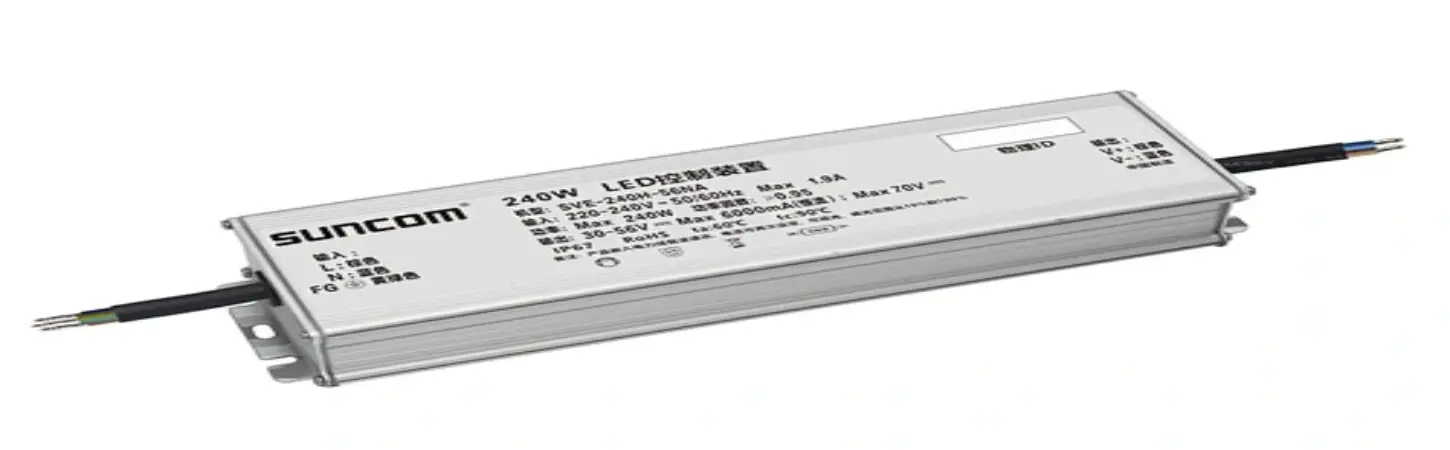
Looking for LED drivers that not only brighten up your surroundings but also stand strong against the elements? Look no further than Suncom's P65-IP67 LED Drivers – where cutting-edge technology meets unbeatable durability!
Key Features
- Robust Protection: With a P65-IP67 rating, our LED drivers provide unparalleled defense against dust and temporary immersion. Say goodbye to worries about harsh environments!
- Reliable Performance: Suncom drivers ensure consistent and reliable performance, offering a stable power supply for your LED lighting solutions.
- Versatile Applications: Ideal for both indoor and outdoor use, these drivers are perfect for a wide range of settings, from residential spaces to commercial landscapes.
Contact us at suncom@gdsuncom.com
Top 10 LED Street Light Driver Manufacturers | 2024
How to Replace LED Drivers in 5 Important Steps
Related Article
This article explains the core principles of both dimming logics, their hardware implementations, and key practical considerations for field deployment.
Understanding Positive and Negative Logic Dimming in LED Driver
Understanding LED Constant Current LED driver for Outdoor Lighting
LED Constant Current Drivers: The Core Heart of Outdoor Luminaires